

Intelligent Logistics Knowledge Base for Low Profile AGV Automation

What Is an Intelligent Logistics Knowledge Base and How Does It Improve Low Profile AGV Warehouse Automation?
With the rapid development of smart manufacturing and digital logistics, enterprises are accelerating the construction of efficient, flexible, and highly automated warehousing systems. In this transformation, knowledge-driven intelligent logistics platforms have become increasingly critical. By systematically integrating technical knowledge, companies can continuously optimize warehouse processes, improve equipment collaboration, and enhance overall supply chain efficiency. Among these technologies, the low profile AGV (low-height automated guided vehicle) has emerged as a key component of modern automated warehousing and flexible logistics systems.
The intelligent logistics knowledge base is not only a repository of technical information, but also a core hub connecting warehouse automation systems, intelligent handling equipment (AGV/AMR), and digital supply chain management systems. Through continuous updates of industry knowledge and real-world application cases, enterprises can quickly master advanced technologies and implement them effectively in operations.
What Is an Intelligent Logistics Knowledge Base?
An intelligent logistics knowledge base is a centralized digital platform that organizes logistics technologies, automation equipment, system integration solutions, and industry application cases. It covers key areas such as warehouse automation, robotics (AGV/AMR systems), AI scheduling and optimization algorithms, and inventory management, along with operation manuals, maintenance standards, case studies, and optimization strategies.
In practical applications, its role goes far beyond technical reference. It also supports system optimization and solution design. For example, when deploying a low profile AGV, enterprises can quickly access equipment specifications, load capacity, path planning logic, integration methods with WMS or ERP systems, and best practices for different warehouse environments. This significantly reduces deployment costs, shortens implementation cycles, and minimizes technical risks. At the same time, the knowledge base provides simulation scenarios and optimization strategies, enabling data-driven logistics decision-making.
Overall, the intelligent logistics knowledge base is not just an information platform—it is a core engine for digital logistics decision-making, automated warehouse planning, and intelligent supply chain management, ensuring efficient operations in high-density storage, flexible manufacturing, and multi-scenario logistics environments.

Core Role of Low Profile AGV in Smart Logistics
A low profile AGV is an automated guided vehicle specifically designed for low-clearance environments and high-density warehouse layouts. Its compact height and high maneuverability allow it to operate efficiently under racks, in narrow aisles, and in complex warehouse structures. Unlike traditional AGVs, it supports multi-task scheduling and intelligent coordination, significantly improving space utilization and operational efficiency.
In modern smart warehousing systems, the key applications of low profile AGV include:
- Under-rack handling: Enables full rack or pallet movement without modifying existing warehouse structures, optimizing inbound and outbound processes.
- High-density storage optimization: Maximizes warehouse space utilization by reducing aisle requirements and improving storage capacity.
- E-commerce fulfillment automation: Supports high-speed picking, handling, and sorting during peak order periods, improving accuracy and efficiency.
- Flexible manufacturing logistics: Enables just-in-time material delivery and automated line replenishment for multi-product, small-batch production models.
- Intelligent fleet coordination: Works with AGV dispatch systems and AI path planning to achieve optimal routing and load balancing across multiple robots.
- Real-time data integration and monitoring: Continuously feeds operational data to WMS or cloud systems for real-time visibility and decision-making support.
Through these capabilities, the low profile AGV not only overcomes space limitations of traditional handling equipment but also drives warehousing toward full automation, flexibility, and high efficiency. It is becoming an indispensable core device in Industry 4.0 logistics systems, significantly improving both operational efficiency and space utilization.
Technology Integration Trends in Smart Warehousing Systems
Modern logistics systems are rapidly evolving toward high-level integration and full automation. Instead of standalone devices, warehouses are now built as system-level intelligent ecosystems. In this transformation, the intelligent logistics knowledge base plays a central role in integrating AGVs/AMRs, robotics systems, AI algorithms, and WMS/ERP platforms.
Within this architecture, the low profile AGV operates as a key execution unit and works closely with multiple advanced technologies:
- Fleet Management Systems (FMS): Coordinate multiple AGVs, manage task allocation, route planning, and dynamic obstacle avoidance to improve transport efficiency and prevent congestion.
- AI path planning algorithms: Dynamically optimize routes based on warehouse maps, order priorities, and traffic conditions, enabling efficient movement even in narrow spaces.
- Warehouse Management Systems (WMS): Handle inventory control and task dispatch, ensuring seamless synchronization between order processing and execution.
- Machine vision systems: Provide environment recognition, shelf positioning, obstacle detection, and navigation assistance, improving safety and operational stability.
Through deep system integration, warehouse operations are shifting from manual coordination to data-driven and AI-powered automation, significantly reducing costs and human errors while improving efficiency.

Industry Application Scenarios
The low profile AGV demonstrates strong adaptability across multiple industries, including:
-
E-commerce and retail logistics
Used for order sorting, shelf handling, and fast outbound processing, improving fulfillment speed and accuracy during peak demand. -
Smart manufacturing factories
Supports material delivery, production line replenishment, and just-in-time logistics for flexible manufacturing systems. -
Pharmaceutical and cold chain logistics
Ensures stable operation in cleanroom and low-temperature environments while maintaining strict compliance with safety and quality standards. -
Third-party logistics (3PL) centers
Enhances warehouse turnover efficiency, reduces labor dependency, and lowers operational costs through intelligent coordination. -
High-density storage and automated warehouses
Operates under racks and in narrow aisles, maximizing storage utilization and supporting automated rack handling systems.
Through these applications, the low profile AGV has become a foundational component of modern intelligent logistics systems.
Future Development Trends of Intelligent Logistics Knowledge Bases
With the advancement of artificial intelligence, industrial IoT, and big data technologies, intelligent logistics knowledge bases are evolving from simple information repositories into intelligent decision-support platforms. Future trends include:
- AI-driven knowledge recommendation systems: Automatically suggest optimal AGV configurations, routes, and warehouse layouts based on operational scenarios.
- Digital twin warehouses: Simulate low profile AGV operations, warehouse layouts, and logistics flows to optimize system design before deployment.
- Cloud-based logistics management: Enable centralized control and data sharing across global warehouse networks.
- Automated solution generation: Generate optimized logistics strategies based on real-time operational data.
- Continuous learning and optimization: Improve AGV strategies, task allocation, and warehouse layouts through machine learning.
These trends show that the low profile AGV will evolve from a simple transport device into a fully integrated execution unit within intelligent logistics ecosystems.
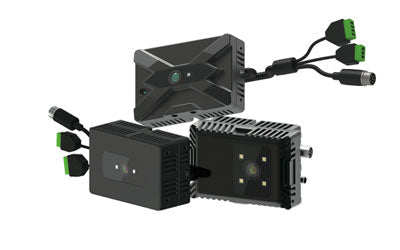
Synexens Industrial Outdoor 4m TOF Sensor Depth 3D Camera Rangefinder_CS40p

Conclusion
The intelligent logistics knowledge base is becoming a core component of modern warehousing and supply chain systems. It not only provides technical knowledge but also drives automation and intelligent transformation. As a key device, the low profile AGV plays a vital role in high-density warehousing, flexible manufacturing, and smart logistics systems.
As technology continues to evolve, knowledge-driven logistics systems will accelerate digital transformation, enabling warehouses and supply chains to become more efficient, intelligent, and fully automated.
