

ToF Technology in Unmanned Gas Stations Enhancing Safety & Efficiency
- von TofSensor
How Can ToF Sensors Make Unmanned Gas Stations Safer and Smarter?
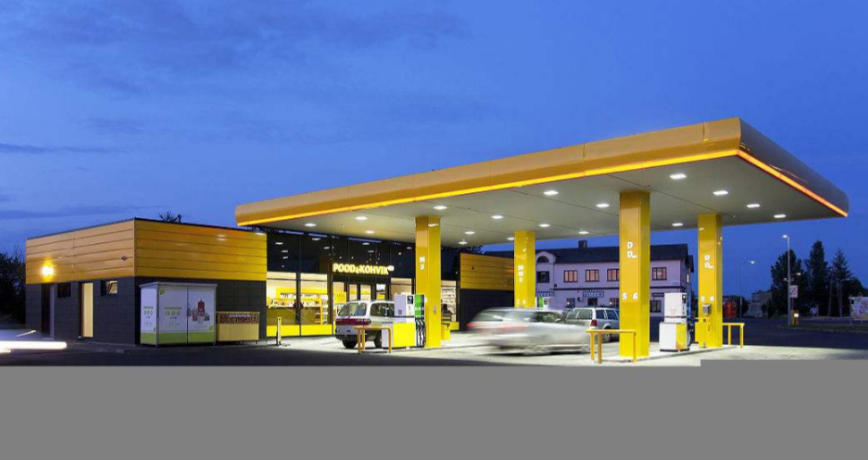
With the rapid development of artificial intelligence (AI) and the Internet of Things (IoT), unmanned gas station systems and smart payment systems are gradually becoming a new trend in the energy and transportation service industry. Traditional gas stations rely heavily on manual operation, which not only incurs high labor costs but also leads to congestion and operational delays during peak hours. By integratingTOF (Time-of-Flight) depth sensing technology into smart fueling and automated payment systems, the efficiency of vehicle recognition, action monitoring, and payment triggering can be greatly improved, providing a solution that is safe, efficient, and cost-effective for gas station operations.
What is Smart Payment?
Smart payment refers to the use of advanced electronic technologies, mobile devices, and network systems to enable fast, convenient, and secure payment methods without relying on traditional cash or manual operation. It typically includes:
-
Mobile Payments: Completing transactions via smartphone apps or QR codes, such as Alipay, WeChat Pay, or Apple Pay.
-
Contactless Payments: Payments are completed automatically without user intervention, for example, in unmanned gas stations using license plate recognition or NFC-based detection.
-
Automated Settlement Systems: Combining sensors, AI, and IoT technologies to automatically record transaction data, generate bills, and confirm payment.
The core features of smart payment are efficiency, contactless operation, and traceable data, enhancing the user experience while reducing operational and management costs.

1. Rising Demand for Unmanned and Smart Payment Systems
With the development of smart cities and intelligent transportation systems, expectations for mobility and energy supply services are changing significantly. Traditional gas stations face challenges in manual management, queuing, and payment processes. In today’s fast-paced environment, consumers increasingly demand a fast, convenient, and secure fueling experience.
Against this backdrop, unmanned gas stations (UGS) and smart payment systems have emerged. These systems integrate intelligent recognition, automatic control, and contactless payment technologies, significantly reducing labor and management costs while enabling data-driven operations, such as user behavior analysis, fuel monitoring, and vehicle traffic management, thereby improving operational efficiency and profitability.
To achieve truly intelligent fueling, systems must solve three key challenges:
-
Quick and accurate recognition of incoming vehicles;
-
Real-time detection of fueling actions and vehicle positions;
-
Automatic and secure payment completion when the user leaves.
This is where ToF (Time-of-Flight) technology demonstrates its advantages. By integrating ToF vehicle recognition modules, the system can accurately detect vehicle contours and distances under various lighting conditions for automatic positioning and identity verification. Meanwhile, ToF action detection sensors monitor actions such as fuel nozzle handling, vehicle entry and exit, and personnel proximity, triggering control logic and payment processes automatically.
For instance, when a vehicle enters the fueling area, the ToF module can perform millisecond-level spatial measurement and depth mapping to automatically identify the parking spot and locate the fuel cap. After fueling, the ToF sensor detects the return of the fuel nozzle and immediately triggers contactless payment and electronic invoice issuance, all without manual intervention.
Such ToF-based smart fueling systems not only enhance automation and safety but also significantly improve the user experience. With further reductions in ToF module costs and algorithm optimization, it will become a core sensing technology for unmanned energy supply systems, providing strong technical support for smart transportation and intelligent retail ecosystems.
2. The Key Role of ToF in Smart Fueling and Payment Systems
As unmanned gas stations and smart payment systems become more widespread, ToF (Time-of-Flight) technology is increasingly recognized as a critical sensor core that supports efficient, safe, and intelligent operation. By providing high-precision distance measurement and 3D spatial perception, ToF modules enhance vehicle recognition accuracy and provide strong technical support for action monitoring and smart payments. The following outlines three key applications of ToF technology in these systems:
2.1 Vehicle Recognition and Positioning — Building Accurate Entry and Fueling Awareness
In unmanned fueling scenarios, fast and accurate vehicle recognition and positioning is the first step in system operation. Traditional cameras are often affected by lighting, weather, or reflections, which can cause misidentification. ToF depth sensors emit and receive light pulses to calculate the time-of-flight, generating high-precision 3D depth maps.
This enables the system to clearly detect vehicle contours, license plate positions, fuel cap orientation, and parking posture, integrating multiple dimensions of information. Even in low light or strong lighting conditions, ToF modules maintain stable distance measurement performance. Compared to traditional 2D cameras, ToF vehicle recognition modules offer the following advantages:
-
Strong anti-light interference capability, maintaining accurate recognition under complex lighting conditions;
-
Fast real-time response, suitable for high-traffic fueling stations;
-
Multi-vehicle type recognition, automatically adjusting detection range and angle according to vehicle size.
In practice, ToF modules generate spatial depth data between vehicles and the ground, enabling automatic lane guidance, precise parking positioning, and entry path planning. For example, the system can automatically determine if a vehicle is correctly parked and provide real-time guidance to adjust its position, significantly enhancing operational efficiency and user experience.

2.2 Action Detection and Safety Monitoring — Building a Protective Mechanism for Unmanned Fueling
In unmanned fueling environments, action detection and safety monitoring are critical for stable system operation. Human errors, equipment malfunctions, or unexpected events can pose safety risks. The high-precision dynamic capture capabilities of ToF sensors make them ideal for safety monitoring systems.
ToF action detection sensors can monitor vehicle and personnel behaviors in real time, such as:
-
Fuel nozzle handling (whether it is properly returned or misused);
-
Vehicle start/stop actions and door opening;
-
Human proximity to hazardous areas.
Combined with AI behavior recognition algorithms, the system can automatically detect abnormal actions—such as 'engine started during fueling' or 'person approaching fuel cap while smoking'—and trigger audible/visual alarms or emergency shutdowns. Additionally, ToF data can integrate with video surveillance to achieve 3D safety monitoring, improving recognition accuracy and reducing false alarms.
Continuous data accumulation and analysis allow operators to build behavioral safety models, providing a basis for risk assessment and workflow optimization, moving from passive supervision to proactive safety management.
2.3 Automatic Payment Triggering and Smart Settlement — Achieving Truly 'Hands-Free Fueling'
In unmanned gas stations, the payment process is crucial for user experience. Traditional QR code scanning or manual confirmation is inefficient. With ToF depth sensing modules, automatic payment triggering and smart settlement become possible.
After a vehicle stops and fueling is complete, the ToF module detects spatial changes to automatically confirm the fueling status, triggering the payment process. Combined with AI + IoT smart fueling systems, ToF modules enable:
-
Contactless payment: Automatic recognition of license plates, driver identity, or mobile devices for seamless deduction;
-
Intelligent fueling data recording: Real-time collection of fuel volume, duration, and cost, automatically generating digital invoices;
-
Multi-mode settlement: Supporting QR code, license plate recognition, membership, or corporate card payments.
By continuously monitoring vehicle actions, ToF ensures accurate payment triggering—for instance, only initiating the deduction process when the fuel nozzle is returned and the vehicle is ready to leave, avoiding errors or duplicate charges.
This ToF-based automated payment experience allows users to fuel and leave immediately, while operators benefit from higher efficiency and better data management, advancing unmanned gas stations toward fully digitalized, autonomous operation.
In smart fueling and payment systems, ToF technology is not merely a distance sensor, but a core component for spatial intelligence and safety logic.
-
It enables the system to 'see' the real spatial relationship between vehicles and personnel;
-
It makes fueling safer, payments more convenient, and management more efficient;
-
It lays the technical foundation for future AI + IoT intelligent energy supply ecosystems.
With further reductions in ToF module costs and algorithm optimization, its applications in smart transportation, autonomous energy supply, and unmanned retail will expand, making it a key driver for the development of intelligent mobility ecosystems.

3. Technical Challenges: Light Interference, Recognition Accuracy, and System Integration — ToF Application Challenges in Unmanned Gas Stations
Although ToF (Time-of-Flight) technology shows great potential in unmanned gas stations and smart payment systems, several technical challenges remain in practical deployment. Overcoming these challenges requires collaboration among manufacturers, system integrators, and operators. The main challenges can be analyzed across three dimensions:
3.1 Light Interference — Ensuring Stable Distance Measurement
The complex and variable lighting conditions at gas stations pose a challenge to the distance measurement accuracy of ToF sensors:
-
Strong sunlight interference: At outdoor stations during daytime, the infrared light emitted by the ToF sensor can be affected by sunlight, leading to increased measurement errors.
-
Nighttime and artificial lighting: Street lights, canopy lighting, and reflections from other vehicles can introduce optical noise.
-
Multi-source light reflections: Surfaces such as vehicle bodies, fuel tanks, and wet or reflective ground may cause multipath reflections, resulting in depth data deviations.
To mitigate light interference, manufacturers typically optimize ToF module design, filtering algorithms, and signal modulation technologies. Strategies include increasing light source power, using frequency modulation variations, multi-frame averaging, and signal correction algorithms to ensure stable distance measurement and reliable recognition under different lighting conditions.
3.2 Recognition Accuracy — Challenges with Multiple Vehicle Types and Complex Poses
Unmanned fueling systems require rapid and precise vehicle recognition under a variety of real-world scenarios, posing high demands on ToF data processing and algorithms:
-
Vehicle diversity: Different vehicle types (compact cars, SUVs, trucks, etc.) have varied dimensions, contours, and fuel cap positions, requiring the system to adapt to multiple recognition models.
-
Vehicle pose variations: Vehicles may enter fueling positions at different angles or with slight deviations or movements, requiring real-time correction of depth measurements.
-
Occlusion and high-speed entry: Partial obstruction by roofs, windows, or fueling equipment, as well as fast-moving vehicles, demands that recognition remains highly accurate.
Improving recognition accuracy requires combining point cloud processing, AI vision algorithms, and multi-sensor fusion. For instance, integrating ToF depth data with license plate recognition cameras or radar can significantly enhance recognition stability and reliability.
3.3 System Integration — Challenges in Data Synchronization and Intelligent Coordination
In an unmanned gas station, ToF modules are not only responsible for distance measurement and recognition but also need to work seamlessly with fuel dispensers, payment terminals, video surveillance, and cloud IoT platforms:
-
Hardware compatibility: Different vendors’ dispensers, sensors, and payment devices may use different interfaces and protocols, increasing integration complexity.
-
Software and data synchronization: Depth data collected by ToF sensors must remain synchronized with payment systems, AI action recognition, vehicle entry management, and cloud records to ensure smooth operation.
-
Real-time control and responsiveness: Triggering payments after fueling, alerting for abnormal actions, and implementing safety protections all depend on rapid processing of ToF data, requiring high system responsiveness and stability.
Efficient integration requires careful planning in system architecture design, software interface standardization, and cloud-edge collaborative processing. Only by simultaneously improving hardware/software compatibility, algorithm optimization, and network communication can unmanned gas stations and smart payment systems operate reliably.
Light interference, recognition accuracy, and system integration are the three key technical bottlenecks for ToF technology in unmanned gas stations:
-
Light interference: Requires optimization of sensor hardware and filtering algorithms.
-
Recognition accuracy: Requires integration of AI, point cloud processing, and multi-sensor fusion.
-
System integration: Requires standardized interfaces, synchronized data, and real-time responsiveness.
By strategically optimizing sensor selection, algorithm performance, and system architecture, ToF technology can maximize its effectiveness in smart fueling and unmanned payment scenarios, enabling efficient, safe, and intelligent operations.
4. Manufacturer Optimization Recommendations: Enhancing Safety and Efficiency
To fully leverage ToF technology, manufacturers can implement the following optimizations:
-
High-performance ToF sensor selection: Choose modules with strong anti-light interference capability, high distance accuracy, and high frame rates to ensure stable vehicle recognition and action monitoring.
-
Integration with AI algorithms: Combine ToF depth data with AI vehicle recognition and action detection algorithms to improve accuracy and reduce false positives.
-
IoT system integration: Build a unified intelligent fueling management platform that connects ToF data with payment systems, cloud monitoring, and operational analytics for smart management.
-
Multi-scenario testing and optimization: Conduct tests across different lighting conditions, vehicle types, and operational behaviors to continuously refine recognition algorithms and system response speed.
Through these measures, unmanned gas stations can achieve highly efficient, safe, and intelligent operations, enhancing user experience and operational profitability.
5. Future Outlook: ToF + AI + IoT Smart Fueling and Automated Payment
In the future, with the integration of AI algorithms, IoT intelligent platforms, and ToF technology, unmanned gas stations will evolve toward fully automated, intelligent operations. ToF modules will not only handle vehicle recognition and action monitoring but also work with AI to predict fueling needs, enabling automated fuel dispensing, smart metering, and payment logging.
Through a ToF + AI + IoT smart fueling system, operators can achieve:
-
Fully automated unmanned fueling operations
-
High-precision vehicle and action recognition for enhanced safety
-
Automatic payment triggering and billing settlement
-
Data-driven operational optimization and energy management
This trend will drive gas stations from traditional service models to smart energy management platforms, providing key support for future intelligent transportation and smart city development.
Summary
In unmanned gas stations and smart payment systems, ToF technology acts as a core module for vehicle recognition, action monitoring, and payment triggering. When combined with AI and IoT platforms, ToF enhances safety and recognition accuracy while significantly improving operational efficiency, providing a robust technical foundation for the widespread adoption of intelligent fueling and automated payment systems.
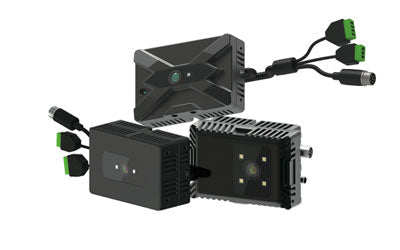
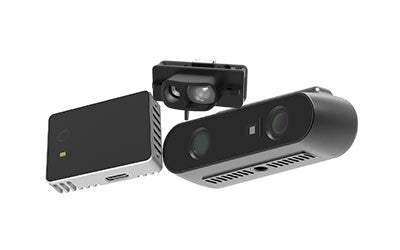
Synexens Industrial Outdoor 4m TOF Sensor Depth 3D Camera Rangefinder_CS40

Our professional technical team specializing in 3D camera ranging is ready to assist you at any time. Whether you encounter any issues with your TOF camera after purchase or need clarification on TOF technology, feel free to contact us anytime. We are committed to providing high-quality technical after-sales service and user experience, ensuring your peace of mind in both shopping and using our products
