

M Series ToF Camera: High-Precision 3D Depth & Industrial Vision
What is the M Series ToF Camera and How Does It Enable 3D Depth Vision?
With the rapid development of industrial automation, robotic vision, and intelligent inspection technologies, Time-of-Flight (ToF) cameras have become a core technology in the field of 3D vision. Among them, the M Series ToF Camera stands out for its high-precision depth measurement capabilities and stable performance, making it widely applied in robot navigation, industrial inspection, intelligent logistics, and 3D modeling.
As a new generation 3D vision sensor solution, the M Series not only enhances spatial perception capabilities but also provides a key foundation for integrating 'machine vision + artificial intelligence' applications.
What is the M Series Time-of-Flight Camera?
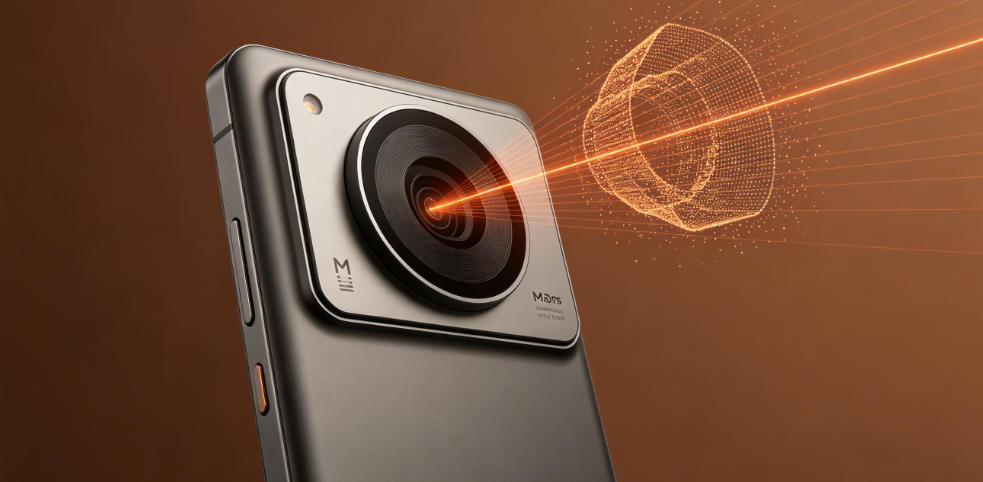
The M Series ToF Camera is a high-precision 3D depth camera based on Time-of-Flight (ToF) technology, specifically designed for machine vision, industrial inspection, and robotic spatial perception. It works by emitting modulated invisible infrared light toward a target object and precisely measuring the time taken for the light to return after reflection, calculating the exact distance for each pixel.
Unlike traditional depth solutions relying on texture or stereo matching, ToF technology is active depth sensing, capable of delivering high-quality 3D data steadily without depending on ambient light or object textures.
Its core value lies in allowing machines not only to 'see images' but also to directly 'understand spatial structure,' enabling true 3D vision perception and spatial computing capabilities.

Difference from Traditional 2D Cameras
Traditional 2D cameras can only capture flat image information, such as color, brightness, texture, and edges, but cannot determine the real distance or spatial structure of objects, which limits their use in robot navigation and automation applications.
In contrast, the M Series ToF Camera directly outputs depth information, upgrading a vision system from '2D perception' to '3D understanding.'
It provides:
- Depth maps: Records the real distance of each pixel
- Point cloud data: Constructs 3D spatial coordinates
- 3D scene reconstruction: Restores real-world geometric structures
- Real-time depth measurements: Supports dynamic scene analysis
- 3D M Series images: Provides structured 3D data for AI vision input and modeling
Thus, it is widely recognized as a camera for 3D, serving as a core perception hardware for robotic vision systems, industrial automation systems, and intelligent devices.
How the M Series ToF Camera Works
The M Series achieves 3D imaging through precise optical ranging and signal processing. The complete workflow includes:
1. Infrared Emission
A high-frequency modulated infrared light source inside the camera emits invisible light signals to the environment, encoded to enhance interference resistance.
2. Light Reflection
Infrared light reflects off object surfaces, with reflection characteristics varying by material (metal, plastic, glass, etc.).
3. Time-of-Flight Measurement
The system measures the time difference between emission and return with high-precision sensors, often at nanosecond accuracy.
4. Depth Computation
Distances are calculated using the formula:
Distance = (Speed of Light × Time Difference) ÷ 2
Each pixel is calculated independently to generate a complete depth matrix.
5. 3D Data Generation
The system outputs structured 3D data, including point clouds, depth maps, and spatial mesh models, ready for AI analysis and robotic control.
This process typically occurs in milliseconds, giving the M Series real-time 3D vision processing capability.
Core Capabilities of the M Series ToF Camera
Compared to traditional stereo vision, structured light, or lower-end depth sensors, the M Series offers advantages in several key areas:
Real-Time 3D Imaging
Supports high-frame-rate 3D data output, maintaining stable depth information even in dynamic scenes—ideal for robotic navigation and industrial automation.
High-Precision Spatial Measurement
Delivers millimeter or even sub-millimeter depth resolution for precision measurement, industrial inspection, and dimensional analysis.
Strong Environmental Adaptability
Operates reliably in dark, bright, or reflective environments without depending on ambient lighting.
Robust Interference Resistance
Unaffected by object color or texture, avoiding common matching errors seen in traditional vision algorithms.
Expandable AI Vision Integration
Can integrate with deep learning models for object recognition, behavior analysis, and 3D semantic understanding.
Core Advantages of the 3D M Series
1. High-Precision Depth Measurement
The 3D M Series uses advanced ToF sensors to achieve millimeter or sub-centimeter distance measurement accuracy:
- Suitable for short to medium-range depth detection
- Stable under complex lighting conditions
- Ideal for industrial-grade precision measurement
2. Real-Time 3D Data Output
Generates high-quality 3D data in real time, including:
- 3D M Series images
- Real-time point cloud data
- Spatial structure models
These data can be directly used for AI analysis, robotic control, and visual recognition.
3. Strong Anti-Interference Capability
Compared to traditional structured light or stereo vision, ToF technology offers stronger environmental resistance:
- Unaffected by complex textures
- Performs well in low-light conditions
- Stable in dynamic scenes
4. Highly Integrated and Easy Deployment
Supports multiple interfaces and development platforms:
- USB / Ethernet connectivity
- ROS robotic system support
- AI vision algorithm integration
Ideal for industrial automation and embedded device development.
Application Value of 3D M Series Images
3D M Series images are not just visual representations of depth—they are crucial inputs for AI and machine vision systems.
Typical applications include:
Robot Navigation
Use depth maps for SLAM mapping and path planning to enable autonomous mobility.
Industrial Inspection
Detect product defects and measure dimensional deviations to improve quality control efficiency.
Gesture Recognition & HCI
Recognize hand movements for natural interactive control.
3D Reconstruction & Modeling
Used in building scanning, digital twins, and VR/AR content generation.

Role of Camera for 3D in Modern Industry
Camera for 3D has become a core vision component in intelligent devices. Its function extends beyond 'seeing' to 'understanding space.'
Key responsibilities include:
- 3D spatial perception
- Distance measurement and modeling
- Dynamic object tracking
- Providing input data for AI vision
When combined with deep learning algorithms, 3D cameras enable more intelligent environmental understanding, serving as essential technology for robotics, autonomous vehicles, and industrial AI systems.
Typical Applications of the M Series ToF Camera
1. Smart Robotics
- SLAM navigation
- Obstacle avoidance and path planning
- Indoor positioning
2. Intelligent Manufacturing
- Product dimension measurement
- Surface defect detection
- Automated production line inspection
3. Smart Logistics
- Package recognition and sorting
- Automated warehouse systems
- AMR robot vision systems
4. AI & 3D Vision Applications
- Human pose recognition
- AR/VR spatial reconstruction
- Digital twin systems
ToF Technology vs. Traditional 3D Vision Techniques
| Technology | Advantages | Limitations |
|---|---|---|
| ToF (M Series) | Real-time, high precision, anti-interference | Higher cost |
| Stereo Vision | Low cost | Texture-dependent, limited precision |
| Structured Light | High precision | Sensitive to ambient light |
Overall, the 3D M Series ToF Camera is becoming the mainstream choice for industrial-grade 3D vision.
Future Development Trends
With AI and robotics evolving, the M Series ToF Camera is expected to advance in:
- Higher-resolution 3D imaging
- AI-integrated vision processing
- Multi-sensor fusion (ToF + LiDAR + RGB)
- Edge computing for real-time 3D analysis
- Miniaturization and low-power designs
In the future, a camera for 3D will be a standard configuration for intelligent devices.
Synexens Industrial Outdoor 4m TOF Sensor Depth 3D Camera Rangefinder_CS40p

Conclusion
The M Series Time-of-Flight Camera is an advanced 3D vision solution driving the next stage of robotic vision and industrial automation.
With high-precision depth measurement, real-time 3D imaging, and strong environmental adaptability, the 3D M Series has become an indispensable core technology for intelligent manufacturing, robotic navigation, and AI vision systems.
