


AI Case Recognition & Pallstapling for Smart Warehouse Automation

How Does AI Case Recognition and Pallstapling Improve Smart Warehouse Automation?
With the continuous advancement of industrial automation and intelligent logistics, the demand for efficient identification and management systems is growing rapidly. In modern warehousing and supply chain systems, case recognition has become one of the key technologies for improving logistics efficiency and automation levels. By combining AI vision systems, 3D imaging technology, and deep learning algorithms, enterprises can achieve automatic identification, classification, and tracking of goods, cartons, and pallets, thereby optimizing overall logistics workflows.
Within this ecosystem, pallstapling (pallet stacking and standardized handling) is becoming an important application direction in smart warehousing. When integrated with case recognition systems, it further enhances warehouse space utilization and automation efficiency.
What Is Case Recognition Technology?
Case recognition is an intelligent identification technology based on computer vision, deep learning, and 3D vision scanning, designed for automatic recognition of cartons (cases), parcels, pallets, and their stacking structures in warehouse and logistics environments. As intelligent logistics and industrial automation evolve, it has become a core component of warehouse automation systems and intelligent sorting systems.
In practical applications, case recognition is not just about identifying boxes—it enables structured digital modeling and state analysis of entire logistics objects. It can operate in high-speed conveyor lines, automated warehouses, and complex stacking environments, completing multi-dimensional perception and decision-making in real time, significantly improving logistics accuracy and efficiency.

Core Functions and Capabilities
In modern intelligent warehousing systems, case recognition performs the following key tasks:
- Size and Shape Detection: Uses 2D + 3D vision fusion to identify cartons of different specifications, enabling standardized data output
- Stacking and Stability Analysis: Evaluates stacking height, center of gravity deviation, and tilt risks for safe handling and storage planning
- Label, Barcode & RFID Recognition: Combines OCR and RFID reading technologies for automatic item identification and tracking
- Automated Sorting & Routing: Assigns logistics paths based on product attributes, destination, and priority
- Real-time Data Integration with WMS/ERP: Instantly uploads recognition results for inventory updates and warehouse visibility
System Value and Technological Evolution
With continuous AI and 3D sensing advancements, case recognition is evolving from a simple identification tool into a core perception layer of intelligent logistics decision systems. It not only 'sees' objects but also 'understands' and 'evaluates' them—detecting abnormal stacking, predicting transportation risks, and optimizing warehouse space utilization.
In this context, applications such as pallstapling (pallet stacking optimization and standardized handling) are deeply integrated, enabling unified management of both cartons and pallets—from single-box recognition to full pallet intelligence.
Importance in Modern Smart Warehousing
Case recognition has become the foundation for:
- Automated sorting and high-speed logistics processing
- Intelligent warehouse and inventory digitization
- Unmanned handling with AGV/AMR collaboration
- Real-time supply chain visibility and tracking
It is driving warehouses from traditional manual operations toward AI-powered intelligent logistics systems, becoming a key sensing technology in Industry 4.0 and smart supply chains.
Core Working Principles of Case Recognition
Case recognition systems are typically composed of multiple intelligent modules that form a complete 'perception–analysis–decision–output' loop. This enables real-time intelligent identification and management of cartons, parcels, and pallets in warehouse environments.
1. Image & 3D Data Acquisition
The system first collects environmental data using industrial cameras, structured light devices, stereo vision systems, and LiDAR sensors. These devices capture both 2D images and 3D spatial information, generating high-precision point cloud data.
Even in complex warehouse environments such as high-speed conveyor belts or dense stacking zones, data acquisition is completed in milliseconds, forming the foundation for AI analysis.
2. AI Feature Extraction & Deep Learning Analysis
After data collection, the system enters the AI analysis stage. Based on deep learning models and convolutional neural networks (CNN), it extracts features such as shape, size, texture, color, and stacking structure.
This stage not only identifies 'what the object is' but also evaluates 'its condition,' such as deformation, tilt, or abnormal stacking patterns. The system continuously improves accuracy through historical data learning.
3. Object Detection & Real-time Tracking
In high-speed logistics environments, objects are constantly moving. Through object detection and multi-object tracking algorithms, case recognition systems can continuously track cartons and pallets on conveyor lines, AGV routes, or warehouse aisles.
This capability ensures stable recognition even in complex scenarios such as occlusion, overlapping objects, or intersecting flows. It also enables integration with pallstapling logic, allowing unified tracking of 'carton + pallet structures.'
4. Structured Data Output & System Integration
After analysis, the system converts results into structured data, including dimensions, categories, coordinates, trajectories, and stacking states. This data is transmitted to WMS, ERP, or TMS systems in real time.
As a result, case recognition transforms from passive perception into an active logistics driver, enabling inventory updates, automated sorting, and warehouse optimization.
Technology Loop Value
Through these four stages, case recognition builds a complete intelligent feedback loop—from data capture to AI analysis, dynamic tracking, and system integration—enabling full automation and digitalization of warehouse operations.

The Role of Pallstapling in Smart Warehousing
In modern intelligent warehousing systems, pallstapling (pallet stacking and standardized handling) is not only a basic operational process but also a key technology for improving efficiency, ensuring safety, and enabling automation. When combined with case recognition, it enables full-stack intelligent monitoring and management of pallets and cartons.
1. Pallet Stacking Detection
Using 3D vision scanning, LiDAR point cloud technology, and AI algorithms, the system accurately identifies stacking height, arrangement, and gaps. It supports both standard and non-standard pallets, ensuring precise warehouse operations.
2. Stack Stability Analysis
Pallet loads may suffer from tilt, imbalance, or instability. By integrating case recognition data, pallstapling evaluates:
- Contact surface and friction between cartons
- Center of gravity distribution
- Structural safety of high stacks
If risks are detected, the system triggers alerts and optimizes handling sequences.
3. Automated Inbound & Outbound Optimization
Pallstapling uses stacking data to optimize handling routes. Based on height, weight, and layout, it generates optimal logistics paths:
- Avoids transport congestion
- Optimizes AGV and low-profile AGV routes
- Improves handling efficiency
4. Warehouse Space Optimization
By analyzing pallet stacking patterns and carton dimensions, pallstapling improves warehouse space utilization, increasing storage density without expanding physical space.
5. Data-Driven Smart Management
Integrated with case recognition systems, stacking data is synchronized to WMS or ERP systems, enabling:
- Full lifecycle pallet tracking
- Inventory forecasting
- AI-based logistics optimization
Advantages of AI-driven Recognition Systems
Modern case recognition systems offer:
- High precision detection
- Real-time processing
- Multi-object recognition
- Automated system integration
- Reduced labor costs
Industry Applications
Case recognition and pallstapling are widely used in:
- E-commerce logistics
- Smart manufacturing
- Third-party logistics (3PL)
- Cold chain and pharmaceutical logistics
Future Development Trends
- AI deep learning enhancement
- Digital twin warehouses
- Cloud-based analytics
- Robotic integration (AGV/AMR)
- Fully automated warehousing systems
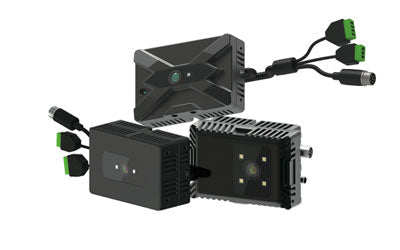
Synexens Industrial Outdoor 4m TOF Sensor Depth 3D Camera Rangefinder_CS40

Conclusion
Case recognition technology is becoming a foundational capability in intelligent logistics systems, enabling automated management of cartons and pallets through AI and 3D vision. Pallstapling, as a key application layer, further enhances warehouse efficiency and automation.
With the development of AI and industrial internet technologies, case recognition will continue driving logistics toward full intelligence, digitization, and automation.
