

ToF Technology in Cave & Geospatial Surveys: From Naica to USGS

How Does ToF Technology Help UAVs Achieve High-Precision 3D Mapping in Naica Crystal Cave and Geological Surveys?
With the rapid development of unmanned aerial vehicles (UAVs) and high-precision 3D imaging technologies, Time-of-Flight (ToF) sensors have become key tools in geospatial surveying, cave exploration, and mineral investigations. In extreme geological environments such as the Naica Crystal Caves (Cave of Crystals in Naica, Chihuahua, Mexico), ToF technology provides accurate three-dimensional data that traditional surveying methods struggle to achieve.
What Is ToF Technology?
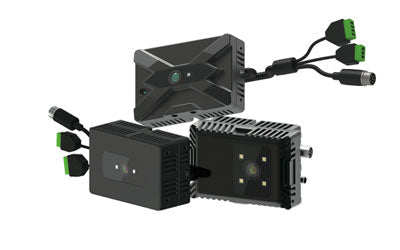
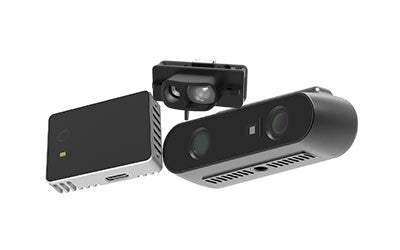
ToF (Time-of-Flight) sensors are high-precision measurement devices that calculate object distance by measuring the time it takes for emitted light or laser pulses to travel to a target and return. Simply put, ToF acts like an “optical rangefinder” capable of rapidly capturing 3D spatial information.
Compared with traditional stereo vision or conventional laser scanning (LiDAR), ToF technology offers several notable advantages:
-
Real-time performance: Distance measurements can be completed within milliseconds, making ToF well suited for real-time 3D scanning in dynamic environments.
-
High accuracy: Ranging precision can reach the millimeter level, enabling detailed capture of complex terrain and fine structures.
-
Strong resistance to lighting conditions: ToF remains stable under strong or low-light conditions, making it ideal for caves, mines, forests, and complex urban environments.
-
Compact and lightweight: Compared with traditional LiDAR systems, ToF cameras are smaller and lighter, allowing easy integration with UAVs or handheld devices for flexible deployment.

Common Applications of ToF
1. UAV-Based Cave Surveying
By equipping UAVs with ToF cameras, researchers can perform high-precision 3D modeling of deep caves and complex terrains. In locations such as the Chihuahua Crystal Caves or the Cascade Tunnel West Portal, manual surveying is often impractical or unsafe. ToF-enabled UAVs can rapidly scan entire cave spaces, generating accurate point cloud data for scientific research, conservation planning, and tourism management.
2. Geospatial Surveying and Terrain Analysis
When combined with datasets from institutions such as the U.S. National Geodetic Survey or USGS EarthExplorer, ToF technology enables high-accuracy terrain mapping and the generation of digital terrain models (DTMs). Whether updating a topographic map of the Gulf of Mexico or conducting mineral resource surveys, ToF delivers 3D data with a level of precision that traditional surveying methods cannot easily match.
3. Scientific Research and Mineral Exploration
Inside the famous Naica Crystal Caves, extreme temperatures and confined spaces make conventional measurement tools difficult to deploy. Using ToF technology, researchers can:
-
Accurately measure crystal dimensions and growth states
-
Build detailed 3D digital twin models of the cave
-
Analyze cave structures and mineral formation processes
These datasets support mineralogical research while also contributing to environmental protection strategies and safe tourism planning.
4. Urban and Industrial Applications
Beyond natural environments, ToF technology plays an important role in urban planning, tunnel inspection, and structural monitoring of bridges and industrial facilities. In projects such as the Cascade Tunnel or large-scale mining tunnels, ToF can rapidly generate 3D tunnel models to support engineering design, deformation analysis, and safety assessment.
5. Educational and Public Outreach Applications
High-resolution 3D models generated using ToF technology can be displayed in museums and educational platforms, showcasing geological wonders such as the Naica Crystal Caves and Mexican quartz caves. These models enable virtual tours and interactive experiences, helping the public better understand complex cave systems and geological structures.

Advantages of ToF Over Traditional Geological Surveying Methods
In caves, mines, and complex terrains, traditional surveying relies on manual rangefinders, total stations, or topographic maps. These approaches have clear limitations:
-
Time-consuming and labor-intensive: Point-by-point measurements are slow and impractical for large or deep environments.
-
Highly constrained by conditions: High temperatures, humidity, and confined spaces pose operational and safety challenges.
-
Limited accuracy: In complex or low-light environments, cumulative errors make it difficult to obtain complete and accurate 3D models.
By contrast, ToF cameras (including ToF depth cameras) offer significant advantages:
-
Fast and efficient: When mounted on UAVs, large areas can be scanned in a short time.
-
High precision: Millimeter-level point cloud data captures complex terrain and fine geomorphological features.
-
Real-time modeling: 3D models can be generated in real time, reducing the need for extensive post-processing.
-
Adaptability to harsh environments: ToF operates reliably in low-light, high-temperature, and high-humidity conditions, making it ideal for caves, mines, and tunnels.
-
Seamless data integration: ToF data integrates easily with GIS, GPS, and global coordinate systems (such as the Prime Meridian in London) for precise geolocation and digital map updates.
For example, along the Gulf of Mexico coastline, ToF-based surveying can rapidly acquire 3D terrain data to support shoreline monitoring, flood risk assessment, and ecological protection efforts.


-
Posted in
CS40P
