

From HD Maps to Mapless Navigation: How ToF Reshapes Robot Perception
How Can Mobile Robots Navigate Without HD Maps Using ToF and SLAM?
In the early stages of mobile robotics, autonomous driving, and warehouse logistics, high-definition maps (HD maps) were once the foundation for precise localization and navigation. These static maps—built using LiDAR, high-resolution cameras, and multi-sensor scanning—accurately recorded roads, walls, obstacles, and environmental structures, providing reliable references for robotic navigation.
However, as application scenarios have expanded from known, static environments to dynamic, open, and complex spaces, the limitations of HD maps have become increasingly apparent. High construction and maintenance costs, long update cycles, and poor adaptability to temporary obstacles or environmental changes have driven the industry toward a new paradigm: mapless navigation.
Within this emerging navigation framework, Time-of-Flight (ToF) depth sensors are becoming an indispensable core component of robotic perception systems.
What Is Meant by Time of Flight?
Time of Flight (ToF) refers to the time it takes for a signal—typically light, laser, or sound—to travel from a transmitter to a target object, reflect off its surface, and return to the receiver.
By precisely measuring this round-trip time and combining it with the propagation speed of the signal (such as the speed of light or sound), the distance between the sensor and the target can be accurately calculated.

I. Core Principles of Mapless Navigation
At its core, mapless navigation enables robots to operate without relying on pre-built high-definition maps. Instead, robots perceive their surroundings in real time, localize themselves autonomously, and dynamically construct local representations of the environment to perform path planning and obstacle avoidance.
Compared with traditional map-based navigation, mapless navigation offers several key advantages:
-
Stronger adaptability to changing environments
-
Robust handling of dynamic obstacles and unexpected changes
-
Significantly lower deployment and maintenance costs
-
Better suitability for mixed indoor–outdoor and low-structure environments
To achieve truly reliable mapless navigation, robots must possess high-precision, low-latency, and stable real-time depth perception, which is where ToF technology delivers critical value.
II. The Technical Value of ToF (Time-of-Flight) Sensors
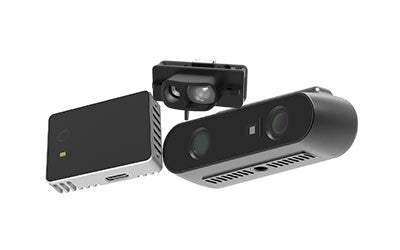
ToF sensors are active 3D depth-sensing devices that operate by emitting modulated infrared light or laser signals and precisely measuring the flight time of the reflected light. Based on this principle, ToF sensors can directly compute the true physical distance between the sensor and objects, generating high-precision depth maps or dense 3D point cloud data in a single frame.
Compared with traditional vision-based approaches that rely on environmental features, or LiDAR systems optimized mainly for mid- to long-range perception, ToF sensors demonstrate distinct engineering advantages in mapless navigation and real-time perception systems.
1. Independence from Environmental Texture for Higher Stability
Traditional visual SLAM systems heavily depend on environmental textures, corners, and edge features. In environments with white walls, smooth floors, metallic surfaces, or repetitive structures, feature scarcity often leads to localization drift or failure.
ToF sensors rely on active ranging rather than natural texture, allowing them to produce stable and reliable depth data even in low-texture or weak-feature environments. This makes ToF particularly effective in warehouses, factory floors, underground spaces, and indoor service robotics applications.

2. Robust Performance Under Variable Lighting Conditions
Because ToF sensors emit their own infrared light, their depth measurements are largely unaffected by changes in ambient lighting.
In nighttime conditions, backlighting, strong shadows, or rapidly changing illumination, RGB cameras often suffer from overexposure or underexposure, while ToF depth cameras continue to deliver stable depth outputs.
This characteristic makes ToF an essential sensing component for night-time robots, all-day operational systems, and perception platforms operating under challenging lighting conditions.
3. Low Latency and High Frame Rates for Real-Time Obstacle Avoidance
ToF sensors typically offer high frame rates and low latency, enabling millisecond-level depth updates. This capability is critical for mapless navigation, especially in scenarios involving:
-
High-speed mobile robots
-
Human–robot shared environments
-
Frequent appearance of dynamic obstacles
By continuously capturing near-field 3D spatial information, robots can rapidly assess obstacle distances and motion trends, enabling instant obstacle avoidance, smooth detouring, and dynamic path replanning.
4. Simple Data Structure and Low Computational Load
Compared with high-channel-count LiDAR or high-resolution visual data, ToF depth data has a more straightforward structure and a shorter processing pipeline.
This makes ToF particularly suitable for embedded platforms, edge computing devices, and low-power systems, reducing reliance on GPUs or high-performance computing resources while improving system responsiveness and overall stability.
Typical Application Areas of ToF Technology
Thanks to these advantages, ToF (Time-of-Flight) sensors are widely adopted in various mobile robotics and intelligent systems, including but not limited to:
-
RGB-D SLAM systems: Providing real-scale depth constraints to improve localization and mapping accuracy
-
Indoor mobile robot navigation: Supporting mapless navigation, autonomous localization, and path planning
-
Near-field obstacle detection: Enabling collision avoidance, emergency braking, and safety protection
-
Human–robot collaboration and safety perception: Detecting human presence, posture, and safety distances to enhance collaborative safety
As mapless navigation and autonomous systems continue to evolve, ToF sensors are transitioning from auxiliary depth sensors to core components of modern mobile robot perception architectures.

III. SLAM + ToF: The Technical Core of Mapless Navigation
In mapless navigation systems, robots no longer rely on pre-built high-definition maps. Instead, they achieve autonomous mobility through real-time environmental perception, continuous mapping, and self-localization. Within this architecture, SLAM (Simultaneous Localization and Mapping) serves as the core algorithmic framework enabling robotic autonomy, while Time-of-Flight (ToF) depth sensors provide real-scale, stable, and low-latency 3D spatial input, significantly enhancing the reliability and practical deployability of mapless navigation systems.
1. The Role of ToF in SLAM Systems
In Visual SLAM or RGB-D SLAM systems, relying solely on RGB images often leads to challenges such as scale ambiguity, feature degradation, and sensitivity to environmental changes. By directly measuring true object distances, ToF sensors introduce physical scale constraints into SLAM systems, fundamentally improving localization and mapping accuracy.
Specifically, ToF addresses several critical challenges in SLAM:
-
Eliminating scale drift in pure visual SLAM
Pure visual SLAM can only recover relative scene structure and cannot directly infer real-world scale, leading to accumulated scale drift during long-term operation. Absolute depth measurements from ToF sensors continuously correct pose estimation and significantly reduce drift. -
Improving robustness under complex lighting conditions
Variations in illumination, shadows, and reflections often degrade visual feature quality. Because ToF relies on active infrared ranging, it can deliver stable depth data even under severe lighting changes, providing reliable support for SLAM. -
Enhancing localization in low-texture and weak-feature environments
In environments with white walls, floors, corridors, or repetitive structures, visual features may become sparse or fail entirely. ToF depth information enables direct 3D structural modeling, allowing robots to maintain accurate localization in such scenarios.
By fusing ToF depth data, robots can rapidly build real-scale 3D maps in unknown or dynamic environments and continuously update their poses, achieving stable and continuous autonomous navigation.
2. Advantages of ToF in Real-Time Obstacle Avoidance and Dynamic Path Planning
One of the greatest technical challenges of mapless navigation lies in real-time responsiveness and operational safety. Robots must continuously perceive environmental changes and perform obstacle avoidance and path adjustments within millisecond-level time constraints.
In this context, ToF depth sensors demonstrate clear advantages:
-
Millisecond-level depth updates
ToF sensors provide high-frame-rate, low-latency depth streams, enabling rapid environmental response. -
High precision in near-field obstacle detection
In human–robot collaboration, warehouse logistics, and indoor navigation, near-field obstacles pose the highest safety risks. ToF sensors excel at detecting objects within the 0–5 meter range, making them ideal for collision prevention and emergency braking. -
Stable tracking of dynamic objects
Dynamic obstacles such as pedestrians, carts, forklifts, and machinery are common challenges in mapless navigation. ToF sensors continuously output 3D positional changes, providing reliable data for motion prediction and decision-making.
When combined with real-time path planning algorithms (such as local planners) and deep learning–based decision models, robots can dynamically replan routes based on ToF depth perception, enabling continuous obstacle avoidance, smooth detouring, and optimal path selection. This capability is especially critical in complex, open, and human–robot shared environments.
3. Overall Value of SLAM + ToF for Mapless Navigation Systems
By deeply integrating SLAM algorithms with ToF-based depth perception, mapless navigation systems can achieve:
-
More stable autonomous localization
-
More realistic 3D environmental modeling
-
Faster responses to dynamic obstacles
-
Higher operational safety and reliability
As a result, mapless navigation is no longer confined to laboratory or highly structured environments but is now being deployed in warehouse logistics, industrial inspection, service robotics, and outdoor mobile robot applications.
IV. Multi-Sensor Fusion and Semantic Understanding
In real-world deployments, ToF sensors are rarely used in isolation. Instead, they are integrated with LiDAR, RGB cameras, and IMUs as part of a multi-sensor fusion framework:
-
LiDAR: Medium- and long-range structural perception
-
ToF depth cameras: High-precision near-field depth sensing
-
RGB cameras: Semantic information and object recognition
-
IMUs: Attitude estimation and motion compensation
On top of this sensor fusion stack, deep learning models for semantic segmentation and object recognition enable robots not only to 'see' obstacles but also to 'understand' the environment—distinguishing traversable areas, static infrastructure, and moving pedestrians, and making context-aware decisions.
V. Edge Computing and Engineering Advantages
Compared with high-channel-count LiDAR, ToF sensors generate smaller data volumes and consume less power, making them particularly well suited for:
-
Embedded systems
-
Autonomous Mobile Robots (AMRs)
-
Service and commercial robots
When combined with edge computing, robots can perform depth processing, SLAM, and decision inference locally, significantly reducing system latency and improving overall reliability.
VI. Typical Application Scenarios
-
Warehouse and logistics robots: Indoor mapless navigation and dynamic obstacle avoidance
-
Urban delivery and service robots: Shopping malls, campuses, underground spaces
-
Agricultural and inspection robots: Complex terrain and adaptive navigation
-
Autonomous driving near-field perception: Parking, low-speed environments, blind-spot coverage
In these scenarios, ToF is evolving from an auxiliary sensor into a foundational depth perception component of mapless navigation systems.
VII. Conclusion: ToF Is Defining the Next Generation of Mapless Navigation
The transition from high-definition maps to mapless navigation represents a critical step toward greater autonomy and generalization in mobile robotics. Throughout this transition, Time-of-Flight (ToF) technology provides robots with a stable, low-latency, and scalable foundation for depth perception.
Looking ahead, as ToF sensor costs continue to decline, SLAM algorithms mature, and multi-sensor fusion and AI inference capabilities advance, 'ToF + SLAM + Mapless Navigation' will become the long-term mainstream architecture for mobile robots and intelligent systems.
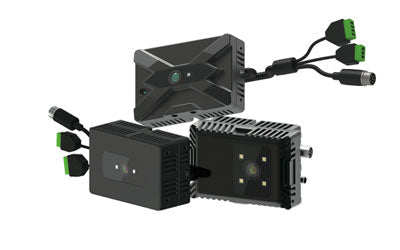
Synexens Industrial Outdoor 4m TOF Sensor Depth 3D Camera Rangefinder_CS40p

After-sales Support:
Our professional technical team specializing in 3D camera ranging is ready to assist you at any time. Whether you encounter any issues with your TOF camera after purchase or need clarification on TOF technology, feel free to contact us anytime. We are committed to providing high-quality technical after-sales service and user experience, ensuring your peace of mind in both shopping and using our products.
