

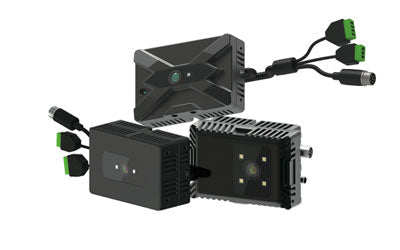
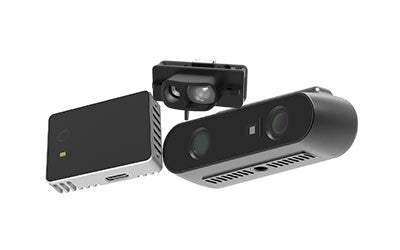
Depth Sensing Cameras in Robotics: Stereo Vision & AMR Applications
- Posted by TofSensor

How do depth sensing cameras improve robotics performance in AMR and stereo vision systems?
In modern robotics and intelligent manufacturing, the depth sensing camera has become one of the core vision technologies driving robotic intelligence upgrades. By capturing 3D spatial structure information, these sensors enable robots to evolve from 2D perception to spatial understanding, significantly improving navigation, grasping, and environmental interaction capabilities.
With the rapid development of Autonomous Mobile Robots (AMRs), industrial robotic arms, and service robots, vision systems based on depth sense are now widely used in warehouse logistics, industrial automation, unmanned retail, and intelligent inspection scenarios, becoming a foundational capability for next-generation robotic systems.
1 What is a depth sensing camera?
A depth sensing camera is a vision device that measures the distance between objects and the camera. Unlike conventional RGB cameras, it generates not only color images but also depth values for each pixel, forming a complete 3D representation of the environment.
This capability allows robots to move from “seeing images” to “understanding space,” enabling them to perceive object distance, size, shape, and spatial relationships directly.
In traditional 2D vision systems, images only contain width and height information, making it difficult to estimate depth without additional sensors or complex computation. In contrast, a depth sensing camera integrates distance information directly into the image stream, allowing robots to build real-time 3D environment models.
In robotic systems, this capability directly impacts key functions such as object grasping, path planning, obstacle avoidance, and human-robot interaction. For example, in industrial automation, robots can determine the exact position and pose of objects for high-precision grasping, while in AMR (Autonomous Mobile Robots) applications, they can dynamically adjust navigation paths to avoid collisions.
Main depth sensing technologies include:
stereo vision
Uses two cameras to calculate depth via disparity, suitable for medium-to-long range sensing and complex environments.
ToF (Time-of-Flight)
Measures distance based on light travel time, offering fast response and high accuracy, commonly used in indoor robotics.
structured light
Projects structured patterns and analyzes deformation for precise short-range depth measurement.
Among these, stereo camera robotics is widely adopted in industrial robots and mobile robots due to its low cost, flexibility, and strong environmental adaptability. It is also frequently integrated into AMR navigation systems, warehouse robots, and industrial inspection systems.
As AI vision and robotics evolve, depth sensing cameras are transitioning from single sensors into core spatial perception modules, deeply integrated with SLAM, computer vision, and deep learning algorithms.

2 How stereo camera robotics works
In a stereo camera robotics system, two cameras with a fixed baseline simulate human binocular vision. Depth is calculated by analyzing the disparity between left and right images.
This mimics human depth perception and produces high-resolution 3D depth maps, which can be further converted into point cloud data.
Key characteristics include:
Suitable for indoor and outdoor environments
Does not require active illumination
Effective for medium and long-range sensing
Stable performance in texture-rich scenes
Therefore, stereo camera for robotics has become a key vision solution for mobile robot navigation and industrial inspection.
3 Industrial applications of stereo camera for robotics
In modern industrial automation systems, the stereo camera for robotics has become a critical component of AMR (Autonomous Mobile Robots) and industrial robotic perception architectures. By mimicking human binocular vision, it converts 2D image data into 3D spatial depth information, enabling robots to make more stable and intelligent decisions in complex and dynamic environments.
In robot navigation and obstacle avoidance, stereo vision systems can build real-time 3D environment reconstruction models. Robots can detect obstacles, estimate distance, size, and motion trends, and perform dynamic path planning. In factories, logistics corridors, and warehouses, this capability significantly reduces collision risks and improves operational efficiency, enabling AMRs to safely operate in mixed human-machine environments.
In object detection and robotic grasping, stereo vision provides depth data that enables accurate 3D pose estimation. Unlike 2D vision systems relying only on image features, stereo vision directly provides spatial coordinates, greatly improving grasping accuracy in electronics manufacturing, precision assembly, and automated sorting systems.
In smart warehouse logistics, stereo camera for robotics helps robots understand shelf structures, aisle widths, and spatial layouts. Combined with SLAM (Simultaneous Localization and Mapping), robots can autonomously navigate warehouses and adapt to dynamic inventory changes.
In human-robot collaboration safety, stereo vision systems continuously monitor distances between humans and robots. When a human enters a safety zone, the system can slow down, stop, or reroute the robot to ensure safe operation in high-speed production environments.
4 How depth sense improves robot intelligence
depth sense enables robots not only to see objects but also to understand spatial relationships.
With data from a depth sensing camera , robots can build high-precision 3D environment models and transition from visual perception to spatial reasoning.
Core capabilities include:
3D environment modeling
Real-time obstacle detection
Dynamic path replanning
Spatial structure understanding
In complex industrial environments, AMR (Autonomous Mobile Robots) can detect moving people, forklifts, and temporary obstacles, and adjust routes in real time using AI-based path planning, improving both efficiency and safety.
As AI robotics advances, depth sense is evolving from a sensing function into a foundational decision-making capability for autonomous robotic systems.
5 AI and depth sensing camera integration
Modern robotic systems integrate depth sensing cameras with AI technologies, including:
SLAM systems for real-time mapping and localization
Computer vision for object recognition
AI path planning for dynamic optimization
Edge computing for low-latency processing
This integration significantly enhances environmental understanding and autonomous decision-making capabilities.

6 Stereo camera robotics vs ToF comparison
Common depth sensing technologies include:
stereo camera robotics
ToF depth sensing camera
Stereo vision is suitable for outdoor and long-range environments, while ToF is better for indoor and low-light conditions. Stereo relies on computation for depth estimation, while ToF directly measures distance with higher speed.
In industrial applications, both technologies are often combined for more robust depth perception.
7 Key advantages of depth sensing cameras
Depth sensing cameras significantly enhance robotic capabilities:
Higher spatial accuracy
More stable navigation
Safer human-robot collaboration
Higher automation efficiency
Stronger environmental adaptability
These advantages make them essential components of modern intelligent robotic systems.
8 Future trends: from depth sense to AI spatial intelligence
Future robotic vision systems will evolve from simple depth sensing to advanced AI-based spatial understanding.
Key trends include:
3D semantic understanding
Multi-sensor fusion
AI-driven visual decision-making
Cloud-edge collaboration
Fully autonomous robotic systems
In this evolution, stereo camera robotics and depth sensing cameras will remain core technologies, deeply integrated with AI systems.
Conclusion
The depth sensing camera is redefining robotic vision. From stereo camera for robotics to AI-driven depth sense systems, robots are evolving from simply seeing the world to truly understanding it.
As technology advances, depth sensing cameras will continue to play a critical role in industrial logistics and service robotics, becoming a cornerstone of future automation systems.
With accurate depth perception and reliable 3D spatial data, a stereo camera for robotics can help AMRs, industrial robots, and autonomous systems improve navigation, obstacle avoidance, object detection, and real-time environmental understanding.
Synexens Industrial Outdoor 4m TOF Sensor Depth 3D Camera Rangefinder_CS40p

After-sales Support:
Our professional technical team specializing in 3D camera ranging is ready to assist you at any time. Whether you encounter any issues with your TOF camera after purchase or need clarification on TOF technology, feel free to contact us anytime. We are committed to providing high-quality technical after-sales service and user experience, ensuring your peace of mind in both shopping and using our products.
