

3D Volume Measurement: AI 3D Vision Solution for Smart Automation
- Posted by LidarSensor

How Does 3D Volume Measurement Improve Smart Logistics and Industrial Automation?
With the rapid development of smart manufacturing, automated logistics, and robotics technology, traditional manual measurement methods are no longer able to meet the growing demand for high-efficiency and high-precision data collection. 3D Volume Measurement is an advanced 3D vision measurement technology that captures the three-dimensional dimensions and spatial structure of objects, enabling fast and accurate volume calculation.
Today, intelligent volume measurement systems based on 3D Camera, LiDAR, ToF Camera, and Structured Light Scanning technology are widely used in warehouse logistics, industrial manufacturing, smart packaging, robot navigation, and automated production lines.
In the Spanish-speaking market, medición 3d (3D measurement) has also become an increasingly popular technology keyword. Companies are adopting 3D vision solutions to achieve automated dimensional inspection, object recognition, and real-time volume analysis, improving operational efficiency while reducing labor costs.
What Is 3D Volume Measurement?
3D Volume Measurement is a technology that calculates the actual volume of an object using three-dimensional imaging technology. The system collects the object's length, width, height, and surface structure data through 3D sensors, creates an accurate 3D model, and calculates the real volume through intelligent algorithms.
Unlike traditional 2D measurement methods, 3D volume measurement can not only obtain flat dimensions but also analyze the spatial information of objects with complex shapes.
A typical 3D Volume Measurement System usually consists of the following components:
- 3D Camera
- LiDAR Sensor
- ToF Camera (Time of Flight Camera)
- Structured Light Scanner
- AI 3D Reconstruction Algorithm
These devices generate high-precision Point Cloud data, allowing intelligent algorithms to quickly calculate object volume.
How Does 3D Vision Volume Measurement Work?
A complete 3D Volume Measurement System mainly includes three core steps: 3D data acquisition, 3D reconstruction, and volume calculation analysis.
By combining advanced sensing devices such as 3D Camera, LiDAR Sensor, and ToF Camera, the system can quickly capture spatial information of objects and use AI algorithms to achieve automated volume measurement.
Compared with traditional 2D image measurement methods, 3D vision technology can not only recognize object appearance but also obtain depth, distance, and spatial structure information. Therefore, it has been widely applied in logistics, industrial inspection, robot vision, and smart manufacturing.

1. 3D Data Acquisition
During the measurement process, the 3D Camera or LiDAR device scans the target object and collects depth information, spatial coordinates, and three-dimensional structural data from the object's surface.
Unlike ordinary RGB cameras that can only capture color and 2D images, depth cameras can accurately detect the distance between the object and the sensor. Even when dealing with objects of different sizes, complex shapes, or various surface materials, they can obtain more complete 3D data.
For example, in logistics applications, a 3D Camera can quickly identify the position, size, and shape of packages, providing accurate data support for subsequent Volume Measurement.
2. Creating a 3D Point Cloud Model
After data acquisition, the collected 3D information is processed by algorithms to generate an accurate 3D Point Cloud model.
Point Cloud data consists of thousands or millions of spatial coordinate points that can realistically reconstruct the three-dimensional structure of an object, including:
- Overall object outline
- Spatial position relationships
- Height variation information
- Length, width, and height dimensions
- Surface geometric features
Through AI vision algorithms and 3D reconstruction technology, the system can analyze point cloud data, identify target objects, and achieve accurate object volume measurement.
For irregular-shaped cargo or complex industrial components, the Point Cloud model provides more comprehensive information than traditional measurement tools, improving measurement accuracy.
3. Automatic Volume Calculation
After completing 3D modeling, the system automatically calculates the occupied volume based on the object's spatial data and outputs the measurement results.
A 3D Volume Measurement System can be widely applied in:
- Package Volume Measurement
- Box Dimension Measurement
- Luggage Volume Measurement
- Industrial Part Inspection
- Smart Packaging Optimization
The entire measurement process requires no manual operation and can complete large-scale data collection and analysis within a short time, improving automation levels in logistics, manufacturing, and warehouse environments.
Why Choose a 3D Volume Measurement Solution?
High-Precision Volume Measurement
Traditional manual measurement methods are often affected by operation methods, measurement angles, and environmental conditions. In contrast, a volume measurement system based on 3D vision technology can continuously collect stable and accurate spatial data.
With advanced 3D Reconstruction Algorithm, the system can build high-precision object models and achieve fast, reliable volume calculations while reducing measurement errors caused by manual operations.
This makes 3D Volume Measurement especially suitable for applications requiring high accuracy, including logistics billing, industrial inspection, and automated manufacturing processes.
Multi-Object Measurement at the Same Time
An intelligent 3D Vision System can capture multiple target objects within the same detection area, significantly improving measurement efficiency.
This advantage is particularly valuable in applications such as:
- Smart warehouses
- Automated sorting systems
- Express logistics centers
- AGV/AMR robots
- Automated production lines
By obtaining real-time three-dimensional information of multiple objects, companies can optimize warehouse space utilization and improve cargo handling efficiency.
Reduce Equipment and Operating Costs
Compared with traditional complex 3D scanning equipment, volume measurement solutions based on 3D Camera and AI algorithms offer greater flexibility and lower deployment costs.
The system requires less manual operation and reduces the need for maintenance of mechanical measurement equipment. Meanwhile, automated data collection and intelligent analysis help companies lower labor costs and improve overall operational efficiency.
With the development of smart logistics, Industry 4.0, and robotics technology, AI-powered 3D vision solution is becoming an important technology for enterprises to achieve digital transformation.
Applications of 3D Volume Measurement in Logistics and Warehousing
Modern logistics industries process millions of packages and goods every day. Quickly and accurately obtaining object dimensions and volume information has become a key factor in improving transportation efficiency, optimizing warehouse space, and reducing operational costs.
Traditional manual measurement methods are not only time-consuming but are also easily affected by human errors, making them unsuitable for the development of intelligent logistics and automated warehouses.
With a 3D Volume Measurement Solution, companies can use advanced vision devices such as 3D Camera, LiDAR Sensor, and ToF Camera to capture real-time three-dimensional data of goods, automatically calculate length, width, height, and overall volume, and provide accurate data support for smart logistics systems.
3D Volume Measurement is widely used in the following scenarios:
Package Volume Measurement
In express delivery, logistics, and transportation industries, package dimensions directly affect shipping costs and warehouse space utilization.
Through a 3D Volume Measurement System, devices can automatically scan package shapes, quickly obtain three-dimensional dimensions, and calculate the actual occupied volume.
Compared with traditional manual measurement, 3D Volume Measurement System provides faster and more accurate measurement while supporting automatic recognition of packages with different sizes and shapes.
This provides reliable data for:
- Smart logistics billing
- Transportation planning
- Cargo classification
- Warehouse optimization
Smart Packaging Optimization
In e-commerce logistics and automated packaging applications, efficient use of packaging space has become increasingly important.
By obtaining real-time 3D information of products and packaging boxes, a 3D Vision System can analyze internal space utilization and help companies select more suitable packaging sizes.
Combined with AI algorithms, the system can reduce excessive packaging, minimize the consumption of filling materials, and improve transportation efficiency.
This enables a more environmentally friendly and cost-effective smart packaging process.
Automated Warehouse Management
In modern smart warehouses, 3D vision technology can be integrated with AGV (Automated Guided Vehicle), AMR (Autonomous Mobile Robot), and automated sorting systems to achieve more accurate cargo recognition and automated handling.
By collecting three-dimensional environmental information, robots can better determine the position, size, and placement status of goods, improving picking, transportation, and storage efficiency.
At the same time, the intelligent perception capability of a 3D Vision System helps warehouses achieve real-time inventory management and space optimization, accelerating the development of highly automated and intelligent logistics operations.
Difference Between 3D Camera Volume Measurement and Traditional Measurement Methods
With the growth of smart manufacturing, intelligent logistics, and automated warehousing, traditional manual measurement methods are gradually unable to meet enterprises' requirements for high-efficiency and high-precision data collection.
In the past, workers typically used measuring tapes, laser distance meters, and other tools to manually measure object dimensions and calculate volume. This method was not only time-consuming but also easily influenced by operating conditions and human factors.
In comparison, 3D Camera Volume Measurement uses advanced 3D vision technology to automatically collect spatial data through depth cameras, ToF sensors, or LiDAR devices, and quickly complete dimensional analysis and volume calculation through intelligent algorithms.
It provides a more accurate and efficient solution for industrial automation.

Traditional Measurement Methods:
Manual Operation Required
Workers must manually measure the length, width, and height of objects, making it difficult to handle large quantities of packages or industrial parts efficiently.
Slow Measurement Speed
When dealing with large numbers of packages or components, manual measurement has low efficiency and can slow down logistics and manufacturing processes.
Higher Risk of Errors
Measurement results may be affected by operation methods, measurement angles, and operator experience, reducing data accuracy.
Difficult to Measure Complex Objects
For irregular packages, special-shaped products, or objects with complex structures, traditional tools cannot easily obtain complete dimensional information.
3D Camera Volume Measurement:
Automatic 3D Data Collection
Through 3D Camera, ToF Camera, or LiDAR Sensor, the system can capture depth information in real time, generate accurate 3D models and Point Cloud data, and provide reliable measurement results.
Real-Time Volume Calculation
The system automatically analyzes spatial dimensions and quickly completes Volume Measurement, greatly improving measurement efficiency.
Supports Complex Object Measurement
Even for irregular shapes, different sizes, or objects with various surface materials, the system can accurately recognize and calculate volume.
Integration with Robots and Industrial Systems
3D vision solutions can be integrated with AGV, AMR, robotic arms, and smart warehouse systems to achieve automated inspection, handling, and management.
Therefore, more and more companies are adopting AI-powered 3D vision solution to improve production efficiency, optimize logistics workflows, and promote smarter applications in warehousing, manufacturing, and robotics.
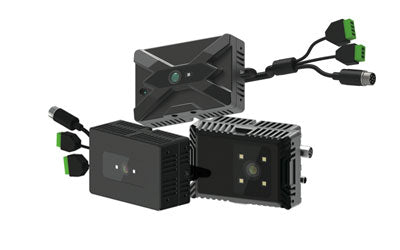
MRDVS 3D Volume Measurement Solution Advantages
MRDVS provides efficient three-dimensional perception solutions for industrial automation based on AI vision technology and Visual SLAM capabilities.
Its 3D Volume Measurement Solution offers the following advantages:
All-in-One Intelligent Algorithm
The system integrates advanced volume measurement algorithms internally, eliminating the need for complex additional configurations.
With built-in intelligent processing capabilities, it can quickly analyze 3D data, identify objects, and complete accurate volume calculations, simplifying deployment and improving measurement efficiency.
Wide Field of View Design
The solution adopts a wide field-of-view design to support a larger data acquisition range.
This enables the system to capture more environmental information in a single scan, improving measurement speed and efficiency, especially in large-scale applications such as warehouses, logistics centers, and industrial environments.
Strong Environmental Adaptability
The system maintains stable performance even under changing lighting conditions or low-light environments.
By combining advanced 3D sensing technology with intelligent algorithms, MRDVS solutions can effectively reduce the impact of environmental factors and provide reliable measurement results in various application scenarios.
Flexible Deployment
MRDVS 3D Volume Measurement Solution can be flexibly deployed in different environments, including:
- Smart warehouses
- Manufacturing factories
- Logistics centers
- Robot application scenarios
Its compact and intelligent design makes it easier to integrate with existing automation systems, helping enterprises achieve digital transformation and improve operational efficiency.
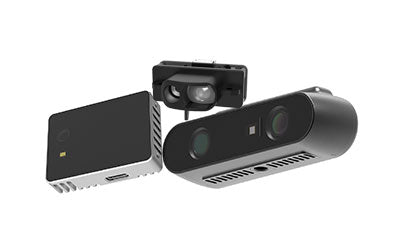
Synexens Industrial Outdoor 4m TOF Sensor Depth 3D Camera Rangefinder_CS40p

Future Trends: How 3D Measurement Technology Drives Intelligent Automation
With the continuous development of artificial intelligence, robotics, and industrial automation, 3D Volume Measurement is becoming an essential technology foundation for smart factories and intelligent logistics.
From medición 3d to AI vision inspection, and from 3D Camera to LiDAR perception systems, three-dimensional measurement technologies are helping enterprises achieve more efficient, accurate, and intelligent data management.
In logistics, manufacturing, and robotics applications, the ability to quickly understand the size, shape, and spatial position of objects has become increasingly important.
Future 3D Vision System solutions will continue to improve through:
- More powerful AI algorithms
- Higher-resolution depth sensing
- Faster real-time processing
- Better integration with robots and automation platforms
Whether it is package volume measurement, industrial inspection, warehouse management, or robotic spatial perception, 3D Volume Measurement will continue to play a critical role in the future of intelligent automation.
As industries move toward greater digitalization and automation, AI-powered 3D vision technology will become a key driver for improving productivity, reducing operational costs, and building smarter industrial ecosystems.
