

AMR Camera for Mobile Robots: Smart Warehouse Navigation Guide

How Does an AMR Camera Enable Autonomous Navigation in Mobile Robots and Smart Warehouses?
With the continuous advancement of Industry 4.0 and smart manufacturing, Autonomous Mobile Robots (AMRs) are rapidly replacing traditional manual handling and fixed-path AGV systems, becoming a core component of smart warehousing and flexible manufacturing. In this transformation, the AMR camera, as a key part of the mobile robot vision system, directly determines navigation performance, obstacle avoidance capability, and positioning accuracy in complex industrial environments.
As search demand for smart warehouse solutions, industrial robot vision systems, and autonomous robot navigation technologies continues to grow, AMR camera-based perception systems have become a critical direction for upgrading smart logistics and automated factories.
1. What Is an AMR Camera? The Core Perception Module of Mobile Robot Vision Systems
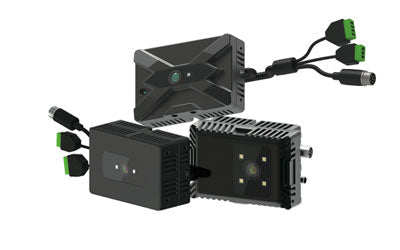
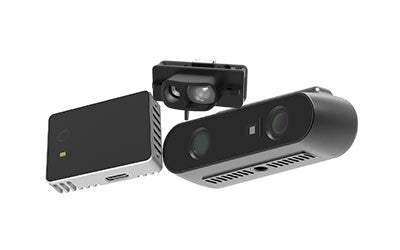
An 'AMR camera' is a high-performance vision sensor system designed specifically for Autonomous Mobile Robots (AMRs). It serves as the core component for environmental perception, path planning, obstacle detection, and real-time localization and navigation.
It is not only the ‘eyes’ of a mobile robot but also the key input module that enables autonomous decision-making in complex industrial environments.
Unlike traditional AGVs that rely on magnetic strips, QR codes, or fixed tracks, AMRs rely on AMR cameras combined with 3D vision cameras, ToF depth sensors, stereo vision systems, and SLAM (Simultaneous Localization and Mapping) technology to achieve true autonomous mobility and environmental understanding.
In industrial applications, AMR cameras are typically integrated with SLAM navigation algorithms, high-precision 3D depth cameras, and AI vision models to enhance localization accuracy, obstacle avoidance capability, and navigation stability.
They can identify shelves, sorting lanes, personnel, and moving equipment, generate point cloud maps, compute optimal paths in real time, and enable safe and efficient autonomous movement in dynamic environments.
In addition, modern AMR camera systems offer strong adaptability to different lighting conditions, maintaining stable depth perception under low light, strong reflections, and complex background interference. Combined with edge computing and deep learning models, AMR cameras further enable object recognition and behavior prediction, significantly improving robot autonomy and operational efficiency.
In short, AMR camera is not just hardware—it is the foundation of intelligent warehouse automation, industrial robot vision systems, and unmanned logistics solutions.

2. Application Scenarios of AMRs in Smart Logistics and Industrial Automation
In modern smart warehousing and Industry 4.0 systems, Autonomous Mobile Robots (AMRs) have become essential execution units in smart logistics solutions. They are widely used in e-commerce warehouse automation, factory material delivery systems, flexible production lines, intelligent sorting systems, and automated handling applications.
Driven by increasing demand for smart warehouse upgrades, unmanned warehouse solutions, and industrial logistics automation systems, AMRs are rapidly replacing traditional AGVs and becoming the mainstream mobile platform.
By integrating high-performance AMR cameras, mobile robots can achieve real-time mapping, dynamic path planning, autonomous obstacle avoidance, and high-precision navigation in complex and dynamic industrial environments.
These capabilities enable stable operation in high-density warehouses, narrow aisles, and multi-robot collaboration scenarios.
In unmanned warehouses and smart factories, the integration of AMR vision systems and robot navigation technologies enables 24/7 operation, high-concurrency task scheduling, and minimal human intervention, significantly improving operational efficiency and supply chain responsiveness.
3. How AMR Cameras Enable High-Precision Environmental Perception and Autonomous Navigation
In complex industrial environments, AMR cameras go beyond simple image capture—they serve as the core perception interface for robot intelligence and decision-making.
Through multi-modal vision fusion, AMR cameras combine 2D image data with 3D spatial information to support path planning, obstacle avoidance, and dynamic decision-making.
First, using 3D ToF depth sensing or stereo vision systems, AMR cameras generate high-density point cloud maps of the environment. This enables accurate recognition of spatial structures such as shelves, aisles, floor variations, and obstacles, significantly improving environmental understanding.
Second, with SLAM technology, AMR cameras can simultaneously perform localization and mapping in unknown or dynamic environments, enabling true autonomous navigation even indoors where GPS is unavailable.
In addition, AMR cameras provide real-time dynamic obstacle detection, identifying pedestrians, forklifts, other robots, and temporary objects. AI-based path planning algorithms allow robots to quickly adapt routes in response to environmental changes.
Combined with edge computing and deep learning, modern AMR camera systems also support object recognition, behavior prediction, and multi-robot collaboration, further enhancing intelligence and adaptability in industrial scenarios.

4. Key Factors Affecting AMR Robot Performance
In AMR system design, the performance of the AMR camera directly impacts the stability and reliability of the entire mobile robot vision system.
Key factors include sensor resolution and depth measurement accuracy. Higher-resolution AMR cameras provide more detailed spatial information, improving path planning precision in complex warehouse environments.
Another critical factor is SLAM algorithm performance, which determines localization stability in dynamic environments, especially in large-scale warehouses and industrial facilities.
Edge computing capability and AI inference performance are also essential, enabling real-time processing of visual data with low latency.
In addition, multi-sensor fusion—including AMR cameras, LiDAR, and IMU sensors—significantly improves navigation accuracy and environmental robustness.
5. Core Value of AMR Cameras in Smart Warehousing
In smart warehousing and industrial automation, AMR cameras are no longer just perception components—they are a key driving force behind efficient logistics system operations.
They significantly optimize path planning efficiency and task execution, enabling stable navigation and precise obstacle avoidance in complex warehouse environments.
Based on high-precision 3D vision and SLAM navigation, AMRs can operate reliably in dense shelving areas, narrow aisles, and dynamic human-robot environments, reducing delays and collisions.
By deploying AMR vision systems, enterprises can achieve warehouse automation upgrades, unmanned handling systems, intelligent sorting optimization, and flexible manufacturing improvements, significantly increasing throughput while reducing labor costs.
In e-commerce fulfillment centers, large manufacturing plants, and third-party logistics (3PL) environments, AMR vision systems support high-concurrency task scheduling, dynamic path optimization, and continuous 24/7 operation.
6. Future Trends of AMR Technology
With the continuous advancement of artificial intelligence, machine vision, and edge computing, AMR cameras are evolving toward higher precision, stronger intelligence, and greater environmental adaptability.
Future AMR robot vision systems will rely more heavily on high-precision 3D vision perception, deep learning algorithms, and multi-sensor fusion architectures (including LiDAR, IMU, and visual SLAM systems) to achieve stronger spatial understanding and more stable autonomous navigation.
As smart warehouse automation becomes more widespread, AMR cameras will become standard components in industrial robot vision systems and play a central role in unmanned logistics, smart factory construction, and flexible production upgrades.
Ultimately, AMRs will evolve from simple transport tools into intelligent mobile platforms capable of perception, decision-making, and collaborative task execution.
Synexens Industrial Outdoor 4m TOF Sensor Depth 3D Camera Rangefinder_CS40p

7. Conclusion: AMR Camera as the Core of Mobile Robot Vision Systems
In the era of smart manufacturing and logistics automation, AMR cameras have become an indispensable core component of mobile robot vision systems.
By integrating 3D vision technology, SLAM navigation, and AI algorithms, AMRs are evolving from simple execution machines into highly autonomous intelligent platforms, driving the continuous advancement of smart warehouse solutions and industrial automation systems.
