

Camera DS ToF Depth Camera Review: Accuracy & Robot Vision Uses
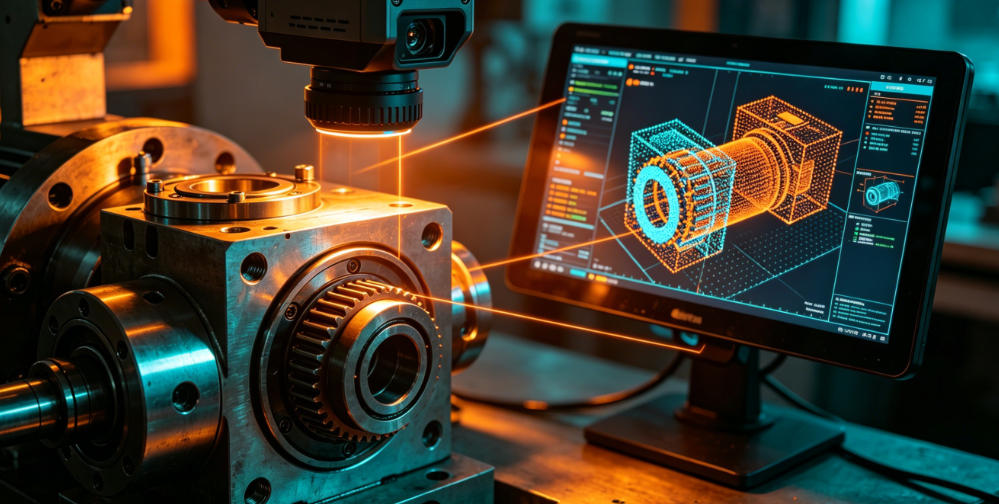
How Accurate Is the Camera DS ToF Depth Camera? Full Performance Review
With the rapid development of 3D vision technology, Time-of-Flight (ToF) depth cameras are widely used in robot navigation, industrial automation, logistics sorting, smart manufacturing, human recognition, and 3D reconstruction. For enterprises and developers, choosing a ToF camera with stable performance and accurate depth data is critical.
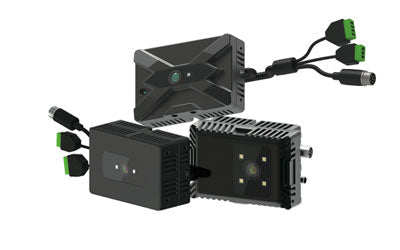
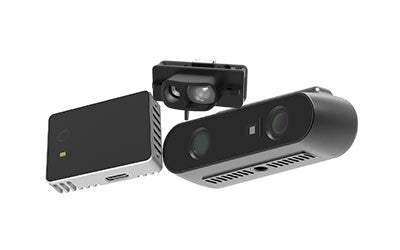
Among various products, the Camera DS Series stands out for its high-precision ranging capability, excellent depth map quality, and robust environmental adaptability, making it a key choice for industrial 3D vision solutions. This article provides a comprehensive review of the DS Series ToF Camera, covering depth quality testing, measurement accuracy, and real-world application performance.
What Is a ToF Depth Camera?
A Time-of-Flight (ToF) depth camera is a 3D vision sensor that measures distance based on the principle of light travel time. It emits modulated infrared light signals to the target scene and calculates the time it takes for light to travel to the object and back. This allows fast acquisition of accurate distance information between objects and the camera, generating complete depth maps and 3D point clouds.
Unlike traditional RGB cameras, which capture only 2D images, a ToF camera can not only detect the appearance of objects but also perceive their position, distance, and shape in 3D space. Therefore, it is widely applied in robot vision, industrial automation, smart manufacturing, logistics, 3D scanning, and AI perception systems.
Compared to stereo vision and structured light solutions, ToF depth cameras offer significant advantages:
- Real-time acquisition of high-precision depth information
- No need for complex image-matching algorithms
- Independent of object surface texture
- Works in low-light or even dark environments
- Fast depth calculation with low latency
- Suitable for dynamic target detection and tracking
- Simultaneous output of depth maps and point clouds
- Easier integration into industrial automation systems
In industrial environments, traditional vision systems are often affected by lighting changes, textureless objects, or complex backgrounds. ToF cameras actively emit infrared light to achieve stable ranging, maintaining high measurement accuracy even with dark objects, low-reflectivity materials, or complex production scenes.
With the development of AI, robotics, and Industry 4.0, ToF depth cameras have become an essential part of modern 3D vision systems. From autonomous mobile robots (AMRs) and automated guided vehicles (AGVs) to smart sorting systems, robotic arms, and 3D dimensional inspection, more enterprises are adopting ToF cameras as core perception devices to enhance environmental awareness and automation levels.
For high-precision spatial perception scenarios, industrial-grade products like the Camera DS Series ToF depth camera provide stable and reliable depth data, supporting high-accuracy measurement, real-time obstacle avoidance, object recognition, and 3D reconstruction, serving as a strong technical backbone for smart manufacturing and robot vision.

Importance of Depth Quality Testing for Camera DS Series
For a depth camera, merely acquiring depth data does not indicate excellent performance.
Key performance indicators that truly affect application outcomes include:
- Depth Accuracy
- Depth Stability
- Point Cloud Quality
- Distance Error
- Edge preservation capability
- Resistance to ambient light interference
Depth quality testing of the Camera DS Series focuses on these core metrics to validate performance in real industrial environments.
Depth Accuracy Testing
Among all performance indicators, depth accuracy is the most critical and directly impacts real-world application effectiveness. High-accuracy depth data ensures reliable measurement and perception and directly affects downstream algorithms, such as object recognition, path planning, collision detection, and 3D reconstruction.
In testing the Camera DS Series, a rigorous methodology is used: placing standard measurement boards or objects of known size at multiple fixed distances (near, mid, far) and comparing the camera’s measurements with true physical distances. Errors and noise levels are calculated to fully evaluate the ranging capability and stability of the Camera DS Series.
Testing Highlights
- Low short-range measurement error: 0.5–2 meters, errors controlled at millimeter level, ideal for precision grasping, industrial inspection, and small object detection.
- Stable mid-range depth data: 2–5 meters, low fluctuations and noise, continuous point clouds, suitable for autonomous navigation and medium-range scanning.
- High long-range consistency: 5–10 meters, measurements remain stable, ideal for warehouse logistics, large indoor mapping, or AGV path planning.
- Excellent noise control: outputs smooth depth maps in varying lighting conditions, ensuring reliability for subsequent processing algorithms.
High-Precision Applications
The Camera DS Series demonstrates significant industrial and intelligent system applications:
- AGV Navigation: Precise environmental measurement for safe, efficient autonomous movement and obstacle avoidance.
- AMR (Autonomous Mobile Robot): Reliable 3D spatial perception supporting path planning and task execution in complex scenarios.
- Automated Warehousing Systems: Accurate detection of shelves, pallets, and packages to optimize logistics sorting efficiency.
- Industrial Inspection Equipment: Real-time measurement of product dimensions and geometry for precise quality control.
- Intelligent Logistics Solutions: Supports robotic handling, stacking, dynamic path adjustment, and warehouse automation.
High-precision depth data also provides a solid foundation for 3D modeling, point cloud processing, and AI vision algorithms, making the Camera DS not just a measurement tool but a core sensor in industrial automation, smart manufacturing, and robot vision systems.
Depth Map Quality Assessment
Depth map quality directly affects subsequent vision algorithm performance.
High-quality depth maps provide:
- More accurate object recognition
- Complete object contours
- Improved spatial perception
- Higher-quality 3D reconstruction results
In tests, the Camera DS Series generates detailed and sharp depth maps, even in complex scenarios such as:
- Multi-object environments
- Reflective surfaces
- Dark-colored objects
- Irregularly shaped items
This capability is particularly important for industrial machine vision systems.
Point Cloud Performance
Point cloud quality is a key metric for 3D vision systems.
High-quality point clouds assist with:
- 3D measurements
- Robotic grasping
- Automated inspection
- Digital twin modeling
- Smart factory applications
The Camera DS Series generates point clouds with:
- High density
- Low outlier count
- Clear contours
- Strong continuity
This ensures a reliable basis for downstream 3D vision algorithms.
Ambient Light Adaptability
Industrial sites often have:
- Strong illumination
- Outdoor sunlight interference
- LED reflections
- Frequently changing lighting
Thus, ToF cameras must have robust anti-interference performance.
In ambient light tests, the Camera DS Series shows excellent stability:
- Depth maps remain complete under high brightness
- Measurement errors remain minimal
- Point cloud data stays continuous and reliable
This enables deployment in diverse real industrial scenarios.

Camera DS in Robot Vision Applications
With the rapid growth of industrial automation, smart manufacturing, and robotics, the robot vision market is booming. The Camera DS Series, as a high-performance ToF depth camera, offers excellent depth measurement accuracy, stable point cloud output, and strong environmental adaptability, widely applied in robot vision and 3D vision solutions for reliable spatial perception.
Intelligent Mobile Robots (AMR/AGV)
In intelligent mobile robots, the Camera DS Series enables high-precision map building, path planning, and real-time navigation. By accurately capturing 3D environmental information, robots can:
- Construct real-time 3D maps (SLAM)
- Dynamically plan optimal routes
- Efficiently avoid obstacles, ensuring safe operation
- Achieve all-weather autonomous navigation, even under indoor lighting variations or complex obstacles
This makes the Camera DS an ideal sensor for automated logistics, warehouse robots, and service mobile robots.
Industrial Automation
In manufacturing and smart production, the Camera DS Series supports machine vision devices with precise depth data, enabling:
- Automated product inspection and defect detection
- High-precision product positioning for robotic arm handling
- Dimensional measurement and geometric analysis
- Defect detection for various materials and complex surfaces
Coupled with AI algorithms, the Camera DS enables efficient production line monitoring, improving productivity and reducing labor costs.
Warehousing and Logistics
In modern warehouses and logistics, the Camera DS Series provides stable depth information for smart sorting systems and automated handling equipment, enabling:
- Accurate package recognition and sorting
- Automatic detection of pallets and shelves
- Optimized transport paths for efficiency
- Adaptation to items of various sizes, colors, and materials
This high-performance depth perception significantly enhances intelligent warehouse operations and unmanned material handling.
3D Scanning and Modeling
Beyond robot navigation and industrial automation, the Camera DS is valuable for 3D scanning, modeling, and virtual reality. Its high-precision depth data and rich point clouds enable:
- Accurate 3D point cloud acquisition
- High-quality 3D reconstruction
- Digital twin modeling and virtual factory creation
- Input for VR/AR applications
Whether for industrial measurement, research, or 3D reconstruction and VR/AR
Why Choose the Camera DS Series ToF Depth Camera?
With the development of smart manufacturing and Industry 4.0, the requirements for advanced depth sensing devices continue to increase.
The Camera DS Series offers:
- High-precision depth measurement
- Excellent depth map quality
- Stable point cloud output
- Strong environmental adaptability
- Rich industrial application support
Whether for robot development, machine vision projects, or 3D imaging system integration, the DS Series ToF Camera delivers a reliable and efficient depth sensing solution.

Conclusion
The ToF depth camera has become a critical component of modern 3D vision systems. The Camera DS Series, with outstanding performance in depth quality testing, demonstrates strong competitiveness in depth accuracy, point cloud quality, environmental adaptability, and industrial applications.
For enterprises and developers seeking high-performance ToF cameras, industrial depth cameras, 3D vision sensors, or robotic vision solutions, the Camera DS Series is a highly recommended choice.
With the continuous advancement of smart manufacturing, robotics automation, and AI-powered vision technology, the Camera DS Series is expected to play an increasingly important role in the future of industrial perception systems.
