

What is a 3D Camera? Depth Sensing & Three-Dimensional Imaging
- Posted by TofSensor

How Does a 3D Camera Work and Why is Depth Sensing Important?
In fields such as industrial automation, robotic vision, autonomous driving, augmented reality (AR), and intelligent security, three dimensional cameras (three dimensional camera) and camera vision 3d (3D vision cameras) have become critical driving forces. With the growing demand for depth perception, understanding the working principles, technology types, and application scenarios of 3D cameras is essential for developers, engineers, and business decision-makers. This article provides a systematic introduction to what a 3D camera is, how it works, the mainstream technologies, and its practical application value.
What is a Three-Dimensional Camera (Three Dimensional Camera)?
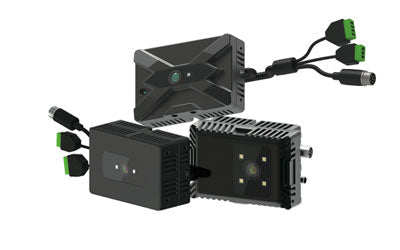
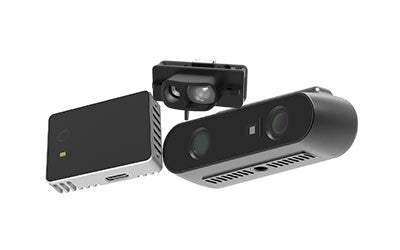
A three dimensional camera (three dimensional camera), also referred to as a 3D camera, three-dimensional imaging camera, or 3D depth sensor, is a high-end sensor device capable of capturing both spatial depth information and visual images. Unlike traditional 2D cameras, which only capture flat images, a camera vision 3d system records scene color, texture, brightness, and distance information simultaneously, generating complete data for 3D modeling, spatial analysis, and depth sensing.
This 3D perception ability allows the camera not only to 'see the object’s shape' but also to understand the object’s true position, size, orientation, and spatial relationships. For example, in industrial production, a 3D camera can detect misaligned or defective parts; in robotic navigation, it helps robots judge obstacle distance and shape for precise avoidance; in AR/VR applications, it captures the full 3D structure of environments, supporting immersive experiences.
Modern 3D cameras often combine ToF (Time-of-Flight) technology, structured light, stereo vision, or multi-sensor fusion to maintain high-precision measurements even in complex lighting or dense crowd scenarios. They serve as the core sensing unit for 3D vision systems, intelligent robots, autonomous vehicles, and intelligent security solutions, providing the essential hardware foundation for building intelligent vision applications.
In short, 3D cameras do more than let devices “see the world”; they enable devices to understand space, perceive depth, and make intelligent decisions and actions, making them a vital technology in modern machine vision and intelligent systems.

Core Technical Principles of 3D Cameras (Three Dimensional Camera)
Modern camera vision 3d systems rely on multiple depth sensing technologies, each with unique advantages for different applications, providing reliable 3D data for industries such as robotics, autonomous driving, and smart home systems. Below is an overview of the main technical principles and their applications:
1. ToF (Time-of-Flight) Depth Cameras
Time-of-Flight (ToF) 3D cameras emit infrared light pulses or continuous-wave sources and measure the time it takes for the light to travel to an object and return to calculate the depth for each pixel, generating real-time depth maps.
-
Advantages:
-
High frame rate real-time depth output, suitable for dynamic scenes
-
Strong adaptability to lighting variations; stable under bright or complex light
-
Compact and easy to integrate, ideal for mobile or embedded devices
-
-
Typical Applications:
-
Industrial robot obstacle avoidance and workspace perception
-
Autonomous vehicle environment perception and obstacle detection
-
Warehouse and logistics AGV navigation
-
Intelligent security and crowd monitoring
-
2. Structured Light 3D Cameras
Structured light cameras project specific light patterns (stripes or dots) onto object surfaces, then calculate surface shapes and depth based on pattern deformation.
-
Advantages:
-
High-precision depth measurement with fine detail capture
-
Best suited for static objects and close-range scenes
-
Supports precision industrial inspection and human-computer interaction (e.g., gesture recognition)
-
-
Typical Applications:
-
Component size measurement and defect detection in industrial production
-
Precision manufacturing and quality control
-
Gesture recognition, VR/AR control, and interactive applications
-
3D scanning and digital modeling
-
3. Stereo Vision 3D Cameras
Stereo 3D cameras simulate human binocular vision by using two parallel cameras to capture the same scene, then calculate depth information from the disparity between the images.
-
Advantages:
-
No active light source needed; works in natural lighting
-
Effective for medium-to-long distance depth estimation
-
Captures both color images and depth information for rich camera vision 3d data
-
-
Typical Applications:
-
Indoor/outdoor robot SLAM (Simultaneous Localization and Mapping) navigation
-
Drone positioning and obstacle avoidance
-
Autonomous vehicle environment modeling
-
Urban and architectural 3D reconstruction
-
4. LiDAR-Fused 3D Cameras
By combining LiDAR (Light Detection and Ranging) with a 3D camera, long-range, high-precision 3D perception is achieved. The camera provides texture and color, while LiDAR delivers accurate spatial depth.
-
Advantages:
-
High-precision spatial modeling with large coverage
-
Reliable under complex conditions such as low light, fog, or reflective surfaces
-
Enables multi-sensor fusion for enhanced environmental perception
-
-
Typical Applications:
-
Autonomous vehicle high-precision map construction and real-time obstacle recognition
-
Smart traffic management and city-scale 3D modeling
-
Industrial large-equipment spatial awareness and automatic inspection
-
5. Other Advanced Technologies
-
Multi-camera systems: Combine multiple camera angles for depth calculation, suitable for large-scale 3D reconstruction
-
Light field cameras: Capture light direction information for adjustable depth and high-precision 3D analysis
-
AI-enhanced depth sensing: Uses deep learning to improve depth accuracy in complex scenes, such as occlusions, crowded environments, or reflective surfaces
In summary, modern three dimensional camera technology not only captures 3D images but also provides comprehensive spatial information—including position, shape, distance, and texture—through camera vision 3d systems, supporting industrial automation, robotic navigation, autonomous driving, intelligent security, and 3D modeling. Continuous advances in these core technologies enable 3D camera systems to achieve higher accuracy, stronger robustness, and wider applicability across diverse scenarios.

Differences Between 3D Cameras and Traditional 2D Cameras
| Feature | 2D Camera | 3D Camera / Three Dimensional Camera |
|---|---|---|
| Data Captured | Flat image | Color + Depth (RGB-D) |
| Spatial Understanding | Weak | Know object distance, position, and shape |
| Visual Representation | 2D only | Supports 3D modeling and reconstruction |
| Application Scope | Photography, video | Robot navigation, quality inspection, AR/VR |
Because of these advantages, 3D imaging technology is rapidly replacing traditional 2D vision systems in critical visual tasks for smart manufacturing, autonomous driving, and robotics.
Camera Vision 3D Workflow: How Three-Dimensional Cameras Work
Modern camera vision 3d (3D vision cameras) systems use multiple depth sensing technologies and image processing algorithms to achieve three-dimensional understanding of the environment and objects. The workflow can be divided into several key steps, each providing critical data for accurate spatial perception and application support:
1. Image Acquisition
A 3D camera first captures scene information through its sensors, including:
-
Color Data (RGB): Records the color and brightness of each pixel
-
Depth Data: Measures the distance from each pixel to the camera using ToF, structured light, or stereo vision
At this stage, the system collects both 2D images and depth information, laying the foundation for 3D modeling. High-resolution and high-frame-rate cameras enable real-time capture in dynamic scenes, enhancing the adaptability of camera vision 3d systems in fast-moving or mobile environments.
2. Depth Calculation & Data Fusion
Different types of 3D cameras produce raw depth maps, which are then processed and fused:
-
ToF Depth Map: Measures pixel distances directly to quickly generate scene depth
-
Structured Light Depth Map: Calculates high-precision surface depth based on pattern deformation
-
Stereo Vision Depth Map: Computes depth through image disparity
Fusing RGB images with depth maps creates RGB-D point clouds, retaining both color and spatial information. This ensures that 3D cameras can simultaneously understand object appearance and spatial structure.
3. Feature Extraction & Analysis
On the generated RGB-D data, the system computes spatial features and performs pattern recognition:
-
Edge Detection: Identifies object contours and geometric boundaries
-
Surface Analysis: Measures planes, curves, and volumes
-
Texture & Color Analysis: Uses RGB data to recognize materials or specific object features
Through these analyses, 3D cameras can distinguish different objects, estimate size, pose, and relative position, providing actionable spatial information for downstream applications.
4. 3D Modeling & Scene Understanding
Depth data and extracted features are converted into 3D scene models:
-
Point Clouds or Mesh Models: Describe spatial structure and object shapes
-
Scene Segmentation & Object Recognition: Label object types and positions
-
Pose & Motion Estimation: Used for robot grasping, autonomous navigation, or dynamic tracking
Through this process, 3D cameras provide not only static spatial information but also real-time perception of dynamic environments, supporting applications in robot navigation, industrial automation, autonomous driving, AR/VR, and intelligent monitoring.
5. Real-Time Application & Feedback
In real-world systems, the generated 3D models and analysis results are used for:
-
Machine Vision Control: Guiding robots or robotic arms for grasping and assembly
-
Navigation & Obstacle Avoidance: Path planning for drones or autonomous vehicles
-
Quality Inspection & Defect Detection: Precision checking on industrial production lines
-
Augmented & Virtual Reality: Environment modeling and interactive experience optimization
This depth sensing + 3D imaging + feature extraction + modeling workflow forms a closed loop, enabling devices to “see, understand, and act,” enhancing automation and intelligence.
In summary, the camera vision 3d (3D vision camera) workflow integrates image acquisition, depth calculation, feature analysis, and 3D modeling to provide precise three-dimensional perception of the environment and objects, offering strong data support and operational foundations for modern industry, intelligent devices, and virtual reality applications.
This workflow demonstrates the full capability of 3D cameras from perception to understanding and decision support, making them a core sensing unit in intelligent vision systems.
Typical Applications of Three-Dimensional Cameras
Industrial Automation & Quality Inspection
In manufacturing, 3D cameras can inspect product dimensions, surface defects, and assembly precision. Depth information is compared against standard models to enable automated online inspection.
Robot Navigation & Obstacle Avoidance
Mobile robots rely on camera vision 3d data to perceive their surroundings, build maps, and execute precise obstacle avoidance and path planning.
Autonomous Driving & Intelligent Transportation
In autonomous vehicle vision systems, 3D cameras are fused with LiDAR, radar, and other sensors to enhance understanding of pedestrians, obstacles, and road structures.
Smart Retail & People Counting
3D depth-sensing-based people counting systems enable high-accuracy foot traffic statistics, path analysis, and behavior recognition, improving operational efficiency.
Augmented Reality (AR) & Interactive Experiences
3D cameras can scan 3D information in the environment for real-time AR rendering, enhancing immersive user experiences.
Key Tips to Improve Depth Sensing Performance
To maximize the performance of 3D cameras in real environments, consider:
-
Optimizing Lighting Conditions: Proper lighting reduces noise and ensures stable, efficient data capture
-
Calibration & Fusion Algorithm Optimization: Align, filter, and fuse multi-sensor data to improve depth accuracy and robustness
-
AI-Enhanced Scene Analysis: Use deep learning models for intelligent classification, segmentation, and understanding of 3D data
Future Trends of 3D Camera Technology
With advancements in computing power and algorithms, camera vision 3d (3D vision cameras) continue to evolve:
-
AI and Deep Learning Integration: Enables smarter and more proactive 3D perception
-
Edge Computing Integration: Facilitates fast local inference and reduces latency
-
Low-Cost, High-Performance 3D Vision Modules: Expands 3D vision adoption in consumer applications
-
Multi-Sensor Fusion Platforms: Combines ToF, LiDAR, millimeter-wave radar, and other sensors for comprehensive environment understanding
Conclusion
Three dimensional cameras (three dimensional camera) and camera vision 3d (3D vision cameras) are essential for modern intelligent vision systems. They provide spatial understanding capabilities that advance automated inspection, intelligent navigation, unmanned systems, and interactive experiences.
By deeply understanding 3D camera principles, depth sensing technology, 3D imaging workflows, and practical applications, developers and enterprises can better design and deploy high-performance 3D vision solutions, creating greater value for intelligent products and systems.
3D Safe Guarding Privacy RGBD Camera Synexens CS30

After-sales Support:
Our professional technical team specializing in 3D camera ranging is ready to assist you at any time. Whether you encounter any issues with your TOF camera after purchase or need clarification on TOF technology, feel free to contact us anytime. We are committed to providing high-quality technical after-sales service and user experience, ensuring your peace of mind in both shopping and using our products.
