

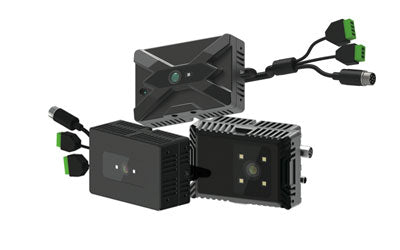
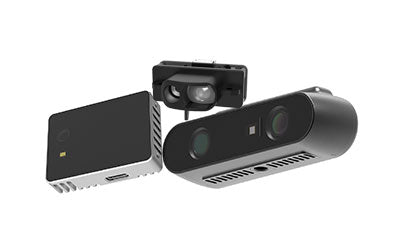
TOF Camera Explained: Benefits, Working Principle, and Applications

What Is a TOF 3D Camera and Why Is It Used for 3D Vision Applications?
With the rapid development of artificial intelligence (AI), robotics, automation, and smart manufacturing, machines are becoming increasingly capable of understanding and interacting with the physical world. However, traditional cameras can only capture two-dimensional images, making it difficult for intelligent systems to accurately understand distance, depth, and spatial relationships.
To solve this challenge, TOF 3D cameras (Time-of-Flight 3D cameras) have emerged as one of the most important 3D vision technologies for modern intelligent systems.
A TOF 3D camera uses Time-of-Flight technology to measure the distance between the camera and surrounding objects by calculating the travel time of infrared light signals. Unlike conventional RGB cameras, TOF cameras generate accurate 3D depth maps, allowing machines to perceive the environment in three dimensions.
Today, TOF depth cameras are widely used in:
- Industrial automation
- Autonomous robots
- AGV and AMR navigation
- Smart factories
- AI vision systems
- Human-machine interaction
- Healthcare monitoring
- Smart homes
- Augmented reality (AR)
As demand for intelligent perception continues to grow, TOF 3D camera technology is becoming a critical component for next-generation AI-powered devices.
What Is a TOF 3D Camera?
A TOF 3D camera is an advanced depth sensing device that measures distance by using the Time-of-Flight principle.
The camera emits infrared light toward objects in the environment. When the light reflects back to the sensor, the system calculates the time difference between sending and receiving the signal.
The basic working process includes:
- The infrared emitter sends light pulses.
- The light travels toward surrounding objects.
- Objects reflect the infrared signals.
- The sensor captures the returned light.
- The processor calculates distance information.
- A 3D depth map is generated.
Each pixel in the depth image contains distance information, allowing the camera to understand the shape, position, and spatial structure of objects.
Compared with traditional cameras, a 3D depth camera provides additional perception capabilities, making it ideal for applications requiring accurate environmental understanding.

How Does a TOF Camera Work?
The working principle of a Time-of-Flight camera is based on measuring the travel time of light.
Since light moves at a constant speed, the distance can be calculated by measuring how long the infrared signal takes to travel to an object and return.
The formula is:
Distance = (Speed of Light × Time of Flight) / 2
The division by two is required because the light travels:
- From the camera to the object
- From the object back to the camera
Modern TOF cameras use advanced components, including:
- VCSEL infrared laser emitters
- SPAD or photodiode sensors
- Depth processing chips
- AI algorithms
These technologies allow TOF cameras to provide:
- Real-time depth measurement
- High-speed sensing
- Accurate distance information
- Reliable performance in different environments
Main Advantages of TOF 3D Cameras
1. Accurate 3D Depth Sensing
The biggest advantage of a TOF depth camera is its ability to capture real-time 3D information.
Unlike RGB cameras that only identify color and texture, TOF cameras measure actual distance.
This enables systems to understand:
- Object location
- Object size
- Human position
- Environmental structure
Accurate depth information is essential for:
- Robot navigation
- Industrial inspection
- Autonomous systems
- AI perception
2. Fast Real-Time Measurement
TOF cameras provide high-speed distance measurement, making them suitable for dynamic environments.
Applications such as autonomous robots and smart factories require instant environmental updates.
A high-performance TOF 3D vision camera can quickly detect:
- Moving objects
- Obstacles
- Human activity
- Changing environments
This improves:
- Robot response speed
- Navigation accuracy
- Operational safety
3. Strong Performance in Low-Light Conditions
Traditional cameras depend heavily on visible light.
However, TOF cameras use infrared signals, allowing them to operate effectively in:
- Dark environments
- Indoor spaces
- Night conditions
- Complex lighting situations
This makes TOF cameras for robotics and automation highly reliable for continuous operation.
4. Compact Size and Easy Integration
Compared with traditional 3D sensing solutions, TOF cameras offer:
- Small form factor
- Low power consumption
- Simple integration
This allows them to be installed in:
- Robots
- Drones
- Smart devices
- Industrial equipment
- Mobile systems
The compact design makes TOF technology suitable for large-scale commercial applications.
TOF Camera Applications in Different Industries
1. Robotics and Autonomous Robots
One of the most important applications of TOF cameras is robot vision.
Robots need accurate perception systems to:
- Detect obstacles
- Understand environments
- Navigate autonomously
- Interact with humans
A 3D vision sensor for robots helps autonomous systems achieve:
- SLAM navigation
- Object recognition
- Collision avoidance
- Intelligent decision-making
Applications include:
- AMR robots
- AGV systems
- Service robots
- Humanoid robots
- Industrial robots
2. Smart Manufacturing and Industrial Automation
In Industry 4.0 environments, factories require intelligent sensing solutions.
TOF cameras are used for:
- Robot guidance
- Quality inspection
- Object positioning
- Measurement applications
- Production monitoring
A TOF camera for industrial automation provides accurate depth information that improves manufacturing efficiency.
Benefits include:
- Higher production accuracy
- Reduced errors
- Improved safety
- Automated workflows

3. Autonomous Mobile Robots (AMR) and AGV Navigation
Modern logistics systems rely heavily on autonomous robots.
AMR and AGV robots need reliable sensors to navigate warehouses and factories.
TOF cameras help robots:
- Detect obstacles
- Measure distances
- Create environmental maps
- Optimize movement paths
Compared with traditional sensors, TOF depth cameras provide richer 3D information, making them valuable for smart warehouse automation.
4. AI Vision and Human-Machine Interaction
With the growth of AI technology, machines need better understanding of human behavior.
TOF cameras enable:
- Gesture recognition
- Body tracking
- Human detection
- Distance measurement
Applications include:
- Smart displays
- Interactive robots
- Healthcare devices
- Smart homes
By combining TOF sensing with AI algorithms, devices can provide more natural interactions.
5. Augmented Reality (AR) and Spatial Computing
TOF cameras play an important role in AR applications.
Accurate depth information allows devices to understand:
- Room structures
- Object positions
- Surface locations
Applications include:
- Virtual furniture placement
- AR gaming
- 3D scanning
- Spatial computing
As AR technology develops, TOF cameras will become increasingly important.
TOF Camera vs LiDAR: What Is the Difference?
Both TOF cameras and LiDAR systems use light-based distance measurement, but they have different characteristics.
| Technology | Features | Applications |
|---|---|---|
| TOF Camera | Compact, fast, real-time depth imaging | Robots, smartphones, automation |
| LiDAR | Long-range scanning and mapping | Autonomous vehicles, surveying |
TOF cameras are especially suitable for:
- Short and medium-range sensing
- Indoor environments
- Real-time 3D perception
LiDAR is preferred for:
- Long-range detection
- Large-scale mapping
- Outdoor applications
Many advanced systems combine both technologies for improved perception.
Future Development Trends of TOF 3D Cameras
The future of TOF camera technology will focus on improving:
Higher Resolution Depth Imaging
Next-generation TOF cameras will provide:
- Higher depth resolution
- Better accuracy
- Faster frame rates
AI-Based Depth Processing
AI algorithms will improve:
- Object recognition
- Scene understanding
- 3D analysis
AI + TOF technology will create smarter vision systems.
Sensor Fusion Technology
Future intelligent devices will combine:
- TOF cameras
- RGB cameras
- LiDAR sensors
- AI processors
to achieve more complete environmental perception.
3D Safe Guarding Privacy RGBD Camera Synexens CS30

Conclusion: TOF 3D Cameras Are Powering the Future of Intelligent Vision
A TOF 3D camera is becoming one of the most important technologies for modern AI and automation systems.
By providing accurate 3D depth sensing, TOF cameras enable robots, smart devices, and industrial systems to better understand the surrounding environment.
From robot vision and smart manufacturing to autonomous navigation and AR applications, TOF cameras are driving the evolution from traditional imaging to intelligent perception.
As AI, robotics, and spatial computing continue to grow, TOF depth cameras, 3D vision sensors, and Time-of-Flight technology will play a central role in the future of intelligent machines.
