

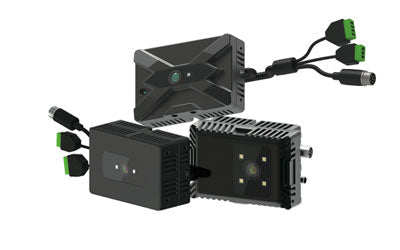
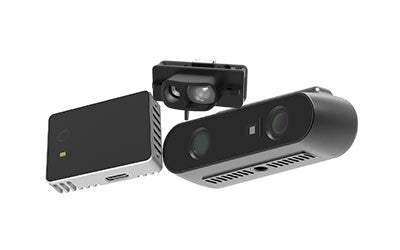
RGB Color Camera and ToF Depth Camera for Industrial 3D Vision

What Is the Difference Between RGB Color Cameras and ToF Depth Cameras in 3D Vision Systems?
With the rapid development of industrial automation, smart manufacturing, and machine vision technologies, 3D vision systems have become a crucial way for intelligent devices to perceive the environment. Among the many vision sensing technologies, the fusion of RGB color cameras (RGB Color Camera) and ToF depth cameras has emerged as a major trend in the industrial vision field.
By combining the color imaging capabilities of RGB cameras with depth measurement technology, modern 3D vision systems can simultaneously capture color information and spatial depth data, enabling more precise environment understanding and object recognition. This fusion technology is widely applied in industrial automation, robotic navigation, warehouse logistics, smart security, and AI vision inspection.
This article explores the role of RGB cameras in 3D vision systems, the technology behind RGBD cameras, and their industrial applications.
What is an RGB Color Camera?
An RGB Color Camera is a type of imaging device that captures image information through three color channels: red (R), green (G), and blue (B). It is currently one of the most common image acquisition technologies in vision systems. Compared to traditional black-and-white industrial cameras, RGB color cameras provide richer color and texture information, helping computer vision systems accurately identify objects and analyze scenes.
From a technical perspective, RGB camera systems are typically based on CMOS image sensors combined with an RGB Bayer color filter array to separate incoming light. Each pixel records different color information, which is then interpolated using image processing algorithms to produce a full-color image. This structure not only ensures high image quality but also maintains high frame rates, low latency, and stable performance in industrial environments, making it widely used in machine vision and smart devices.
In industrial machine vision, RGB cameras are essential for capturing the color, texture, and surface features of objects. Common applications include:
-
Object color recognition: Identify color differences for product classification, sorting, and recognition
-
Surface defect detection: Detect scratches, stains, color variations, and other quality issues
-
Visual positioning and guidance: Provide visual positioning for robots to achieve accurate picking and assembly
-
Image classification and recognition: Enable target detection and intelligent analysis with AI algorithms
-
AI vision inspection: Automate product inspection and quality control on production lines
Moreover, with advances in AI and automation, RGB color cameras are increasingly used in smart manufacturing, robotic vision, autonomous driving, intelligent retail, and security monitoring. For instance, in smart manufacturing, RGB cameras help quickly identify products on production lines; in intelligent logistics, RGB cameras assist robots in reading package labels and barcodes for automated sorting.
In modern smart vision systems, 2D images alone often cannot meet the requirements of complex environments. Therefore, RGB cameras are often combined with depth cameras or ToF cameras to form RGBD camera systems. These systems capture both color images and depth information simultaneously, constructing a complete three-dimensional model of the environment.
Through this fusion, vision systems can simultaneously acquire:
-
Color information (RGB data)
-
Depth information (Depth data)
-
Spatial structure information (3D data)
This allows machines to understand three-dimensional space more accurately, enhancing the overall performance of 3D vision systems, robotic navigation, industrial inspection, and automation control. As machine vision and AI technologies continue to evolve, the integration of RGB color cameras with depth sensing is becoming a key trend in intelligent vision systems.

RGBD Camera: Fusion of RGB and Depth Cameras
An RGBD camera integrates an RGB color camera with a depth sensor into a single device.
The core advantages of this design include:
-
Simultaneous capture of color images and depth information
-
Complete 3D scene understanding
-
Reduced system installation complexity
-
Improved machine vision accuracy
For example, in some industrial 3D camera products, the RGB camera is already integrated with the depth sensor, allowing users to obtain both color images and depth data without installing an additional color camera. This design significantly simplifies the deployment and calibration of 3D vision systems.
With RGBD technology, machines can not only recognize the color and texture of objects but also accurately determine their distance, shape, and spatial position.
The Role of ToF Depth Cameras in 3D Vision
ToF (Time of Flight) depth cameras are an active 3D imaging technology. They emit infrared (or near-infrared) light toward the target object and measure the time it takes for the reflected light to return to the sensor. This method directly generates high-precision depth maps, allowing machines and systems to perceive the three-dimensional spatial information of objects.
Compared with traditional 2D vision or ordinary RGB cameras, ToF depth cameras offer significant advantages in industrial and robotic vision:
-
Fast distance measurement: ToF cameras can capture depth information at high frame rates, enabling real-time 3D scene perception, ideal for high-speed production lines and dynamic environments.
-
Real-time depth output: Precise depth values are obtained without complex post-processing, reducing system latency.
-
Strong resistance to ambient light interference: Active infrared illumination ensures stable measurements even under challenging lighting conditions or low-light environments.
-
Relatively low cost: Compared to structured light or laser scanning, ToF cameras have lower hardware and integration costs, making them suitable for large-scale industrial deployment.
-
Compact and easy integration: ToF sensors are small and can be embedded into robots, drones, or automated production equipment.
Common 3D vision technologies in industry include:
-
Stereo vision: Uses two cameras to mimic human binocular vision and calculate depth via disparity. Suitable for long-distance measurement but sensitive to lighting and texture.
-
Structured light: Projects known light patterns and analyzes deformation to generate high-precision depth maps. Suitable for precision inspection but less ideal for moving objects.
-
ToF depth imaging: Measures distance using light travel time, quickly capturing full-scene depth. Ideal for industrial automation, robotic navigation, and dynamic environments.
-
LiDAR (Laser scanning): High precision and long range, typically used for autonomous driving and large-scale environment mapping.
Compared with other 3D vision technologies, ToF achieves the best balance between measurement distance, frame rate, and system cost. It can provide millimeter-level accuracy at hundreds of frames per second, making it highly suitable for industrial production, robotic operations, warehouse logistics, automated sorting, and smart assembly.
In modern industrial 3D vision systems, ToF depth cameras are often combined with RGB color cameras to form RGBD camera systems. This integration allows systems to capture precise three-dimensional spatial information while simultaneously obtaining color and texture data, enabling high-precision object recognition, quality inspection, robotic grasping, and navigation.
With the development of smart manufacturing, robotic vision, and AI visual inspection, ToF depth cameras have become a core sensor in industrial 3D vision systems, providing efficient and accurate solutions for the next generation of intelligent automation.

Core Value of RGB Cameras in Industrial Machine Vision
In many industrial vision applications, relying solely on depth information is insufficient. RGB color cameras provide rich color image data, which can significantly enhance the recognition capability of vision systems.
The primary roles of RGB cameras in industrial scenarios include:
1. Visual Recognition and Object Detection
RGB images provide abundant color and texture information, enabling machine vision algorithms to more accurately perform:
-
Product identification
-
Barcode reading
-
Label recognition
-
Object detection
In AI vision inspection systems, camera RGB images often serve as a critical supplement to depth data, improving detection accuracy and object classification.
2. Industrial Quality Inspection
In manufacturing, RGB cameras can detect subtle surface defects in products, such as:
-
Scratches
-
Color inconsistency
-
Printing errors
-
Material defects
When combined with 3D depth information, vision systems can simultaneously evaluate both dimensions and surface quality, ensuring higher production standards.
3. Robotic Vision and Automation
Industrial robots require precise identification of object location and orientation to execute tasks effectively.
With RGBD camera systems, robots can:
-
Recognize object types
-
Calculate spatial coordinates
-
Perform precise grasping
This technology plays a critical role in automated assembly, warehouse logistics, and intelligent sorting systems.
Typical Applications of RGB Color Cameras in 3D Vision Systems
With the advancement of AI and machine vision, the fusion of RGB and depth cameras is now applied across multiple industries.
Smart Manufacturing
In smart factories, 3D machine vision systems enable:
-
Automated inspection
-
Automated assembly
-
Product dimension measurement
-
Defect detection
RGB cameras provide color information, while ToF depth cameras deliver spatial data. Together, they allow for more precise industrial inspection and quality control.
Intelligent Logistics and Warehousing
In automated warehouse systems, RGBD vision systems can achieve:
-
Automated sorting
-
Package dimension detection
-
Automated stacking
-
Robotic navigation
For instance, in AGV (Automated Guided Vehicle) or AMR (Autonomous Mobile Robot) systems, ToF cameras enable obstacle detection and avoidance, improving logistics efficiency.
People Counting and Smart Retail
RGBD vision systems are also widely applied in people counting and smart retail analytics.
By combining RGB imagery with depth data, systems can perform:
-
Headcount analysis
-
Crowd density monitoring
-
Behavioral analysis
This approach not only increases accuracy but also helps protect user privacy in public environments.
The Role of ToF Depth Cameras in 3D Vision
ToF (Time of Flight) depth cameras are an active 3D imaging technology that emit infrared (or near-infrared) light toward a target object and measure the time taken for the reflected light to return to the sensor. This method directly generates high-precision depth maps, allowing machines and systems to perceive 3D spatial information accurately.
Compared with traditional 2D vision or ordinary RGB cameras, ToF depth cameras offer significant advantages in industrial and robotic vision:
-
Fast distance measurement: High-frame-rate depth acquisition enables real-time 3D scene perception, ideal for fast production lines and dynamic environments.
-
Real-time depth output: Depth values are obtained directly without complex post-processing, reducing system latency.
-
Strong resistance to ambient light interference: Active infrared illumination ensures stable performance even in challenging lighting conditions.
-
Relatively low cost: Compared with structured light or laser scanning, ToF cameras are cost-effective and easier to integrate for large-scale industrial applications.
-
Compact and easy integration: ToF sensors are small and can be embedded in robots, drones, or automated production equipment.
Common 3D vision technologies in industry include:
-
Stereo Vision: Uses two cameras to mimic human binocular vision and calculates depth from disparity. Suitable for long-range measurement but sensitive to lighting and texture.
-
Structured Light: Projects a known light pattern and analyzes its deformation to generate high-precision depth maps. Ideal for precision inspection but sensitive to motion.
-
ToF Depth Imaging: Measures distance directly via light travel time, quickly capturing full-scene depth. Suitable for industrial automation, robotic navigation, and dynamic environments.
-
LiDAR (Laser Scanning): Provides high precision and long-range measurement, typically used in autonomous driving and large-scale environment mapping.
Compared with other 3D vision technologies, ToF strikes the best balance between measurement distance, frame rate, and system cost. It can achieve millimeter-level accuracy at hundreds of frames per second, making it highly suitable for industrial production, robotic operations, warehouse logistics, automated sorting, and smart assembly.
In modern industrial 3D vision systems, ToF depth cameras are often combined with RGB color cameras to form RGBD camera systems. This integration enables systems to capture precise 3D spatial information while also recording color and texture, supporting high-precision object recognition, quality inspection, robotic grasping, and navigation.
With the advancement of smart manufacturing, robotic vision, and AI visual inspection, ToF depth cameras have become a core sensor in industrial 3D vision systems, providing efficient and highly accurate solutions for next-generation intelligent automation.
Conclusion
In modern machine vision systems, the fusion of RGB color cameras and ToF depth cameras is becoming a key direction in 3D vision technology.
By combining camera RGB color information with depth data, RGBD cameras help machines better understand the 3D world, enhancing the efficiency and intelligence of automated systems.
As industrial automation and AI vision technologies continue to advance, RGB cameras and 3D depth cameras will play an increasingly important role in smart manufacturing, robotics, intelligent logistics, and smart cities.
3D Safe Guarding Privacy RGBD Camera Synexens CS30

After-sales Support:
Our professional technical team specializing in 3D camera ranging is ready to assist you at any time. Whether you encounter any issues with your TOF camera after purchase or need clarification on TOF technology, feel free to contact us anytime. We are committed to providing high-quality technical after-sales service and user experience, ensuring your peace of mind in both shopping and using our products.
-
Posted in
CS30
