

Indoor to Outdoor Mobile Robot Navigation: SLAM, ToF & Terrain Control
How Do SLAM and ToF Sensors Help Robots Navigate Both Indoor and Outdoor Environments?
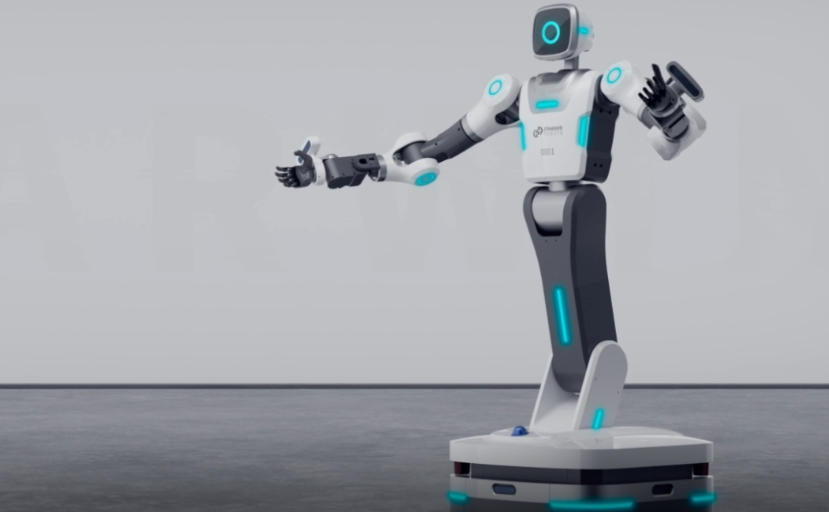
With the continuous development of mobile robot technology, the extension of robots from indoor environments to complex outdoor scenarios has become a major technological breakthrough. This transition not only requires robots to adapt to diverse environmental conditions but also to address multiple challenges such as navigation, perception, path planning, energy management, and stability control. By integrating SLAM (Simultaneous Localization and Mapping), TOF (Time-of-Flight) sensors, and high-precision navigation technologies, robots can seamlessly operate in both indoor and outdoor environments efficiently.
What is the time-of-flight ToF?
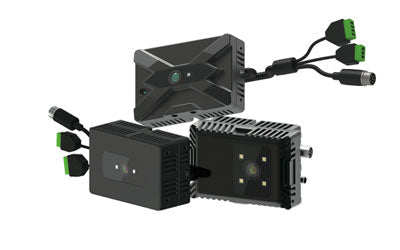
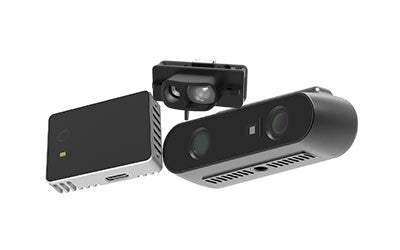
Time-of-Flight (ToF) Sensor is a 3D depth-sensing technology that measures the distance between the sensor and objects by calculating the time it takes for a light pulse to travel to the object and back.
How it works:
-
Emit Light Pulse: The ToF sensor emits an infrared or laser pulse.
-
Receive Reflected Signal: The pulse reflects off the object and returns to the sensor.
-
Calculate Distance: The sensor calculates the distance using the time-of-flight and the speed of light.

1. Evolution of Indoor and Outdoor Mobile Robot Navigation Technology
1. Navigation and Positioning Technologies
Indoor Navigation
-
Primarily relies on LiDAR, visual sensors, ground magnetic strips, QR codes, and other fixed markers for localization and path planning.
-
Indoor environments are relatively enclosed, with mostly static obstacles, making path planning simpler.
Outdoor Navigation
-
Outdoor environments are complex and dynamic, requiring robots to handle diverse terrains, weather conditions, and moving obstacles.
-
Core technologies include:
-
GNSS Positioning: GPS, GLONASS, and other satellite systems provide high-precision outdoor positioning.
-
Visual SLAM and Deep Learning: Robots build real-time maps using visual sensors and deep learning, without external markers, while identifying and avoiding obstacles.
-
LiDAR and Point Cloud Mapping: Provides high-precision 3D environmental perception, recognizing buildings, pedestrians, vehicles, etc., for real-time navigation.
-
ToF (Time-of-Flight) Sensors: Provide precise depth data, improving environmental perception, especially in low-texture, complex lighting, or dynamic environments.
-
Application of ToF (Time-of-Flight) Sensors in Outdoor Navigation
ToF sensors are a 3D depth-sensing technology based on optical ranging principles. They emit infrared or laser pulses and measure the time it takes for the light to travel to an object and back, calculating the distance accurately. This generates high-precision depth information and 3D point cloud data. ToF technology plays an indispensable role in outdoor mobile robot navigation, particularly in the following aspects:
-
Enhanced Environmental Perception
-
In complex outdoor environments, robots need to identify roads, obstacles, pedestrians, vehicles, and other dynamic elements. ToF sensors can generate dense real-time depth maps and, when combined with LiDAR and RGB cameras, achieve multi-source data fusion, improving comprehensive environmental awareness.
-
In low-texture, reflective, or challenging lighting conditions, traditional visual SLAM may miss or misidentify features, while ToF-provided depth data effectively compensates for visual perception limitations.
-
-
Assisting SLAM Systems for Accurate Localization and Mapping
-
ToF depth data can be directly fed into SLAM systems, helping robots perform real-time localization and 3D map construction in complex outdoor terrains.
-
In dynamic environments, such as roads with moving pedestrians or vehicles, ToF quickly updates obstacle distance information, ensuring SLAM stability and accuracy.
-
-
Improving Path Planning and Dynamic Obstacle Avoidance
-
By integrating ToF data, robots can build accurate 3D obstacle models to support dynamic path planning and immediate collision avoidance.
-
In multi-robot outdoor scenarios, ToF helps maintain safe distances and collision prevention in crowded environments.
-
-
Adaptation to Harsh Weather and Lighting Conditions
-
ToF sensors are less sensitive to lighting changes and can maintain accurate distance measurements under strong sunlight, shadows, rain, snow, or at night.
-
Combined with visual sensors, they create a redundant perception system, ensuring reliable operation in diverse and changing environments.
-
-
Application Scenarios
-
Autonomous delivery robots: In outdoor pedestrian streets or campus areas, ToF helps robots accurately avoid pedestrians, obstacles, and vehicles.
-
Agricultural robots: ToF assists in identifying crops, ditches, and uneven terrain, enabling precise operations in fields.
-
Construction and inspection robots: On construction sites or large industrial campuses, ToF combined with SLAM achieves global localization, obstacle detection, and path planning, improving efficiency and safety.
-
ToF sensors not only provide high-precision depth information but also integrate with SLAM, LiDAR, and visual sensors, enabling outdoor mobile robots to navigate stably, map accurately, and avoid obstacles intelligently in dynamic, complex, and variable lighting conditions. It has become a key technology in modern outdoor navigation systems.

2. Environmental Perception and Adaptability
Indoor Environment
-
Mostly static, robots mainly need to detect obstacles, humans, or other robots.
-
Common sensors: visual sensors, ultrasonic sensors, LiDAR.
Outdoor Environment
-
Dynamic and unpredictable, requiring adaptation to weather, lighting, pedestrians, vehicles, and more.
-
Key technologies and solutions:
-
Weather Adaptability: Waterproof designs and rain/fog-resistant LiDAR ensure stable operation in rain, snow, or dusty conditions.
-
Lighting Adaptability: High Dynamic Range (HDR) vision systems and adaptive LiDAR maintain efficient perception under strong light, shadows, or at night.
-
ToF Sensor Assistance: Provides accurate depth information in low light, shadows, or complex terrains, enhancing SLAM map precision and real-time performance.
-
3. Power Systems and Battery Life
Indoor Robots
-
Operate in stable environments with low battery requirements, resulting in relatively short endurance.
Outdoor Robots
-
Outdoor operations are complex and require long-duration, high-efficiency performance. Key measures include:
-
High-Efficiency Batteries: Lithium batteries, solid-state batteries, or hydrogen fuel cells extend operating time for long-distance tasks.
-
Energy Recovery Systems: Technologies such as regenerative braking help prolong battery life.
-
4. Path Planning and Obstacle Avoidance
Indoor Path Planning
-
Common algorithms include A*, Dijkstra, or map-based planning.
-
Indoor environments are structured, with static obstacles, making path planning relatively simple.
Outdoor Path Planning
-
Outdoor environments are dynamic and require real-time route optimization:
-
Dynamic Path Planning: Deep reinforcement learning or neural network algorithms enable intelligent decision-making.
-
Multi-Robot Collaboration: Distributed algorithms or edge computing support coordinated operations, improving efficiency and safety.
-
ToF and LiDAR Fusion for Obstacle Avoidance: High-precision depth data combined with point cloud information allows rapid obstacle detection and path adjustment.
-
5. Motion Control and Stability
Outdoor environments are far more complex than indoor ones, with uneven terrain, steep slopes, and debris. Robots must overcome gravity, varying friction, and sudden obstacles. Therefore, outdoor robot motion control systems must offer high precision, stability, and adaptability. Key measures include:
-
All-Terrain Wheels and Tracked Systems
-
Outdoor robots often use all-terrain wheels or tracked designs to handle mud, gravel, grass, slopes, or irregular surfaces.
-
All-terrain wheels provide better traction and steering, while tracked systems offer higher stability on soft or slippery surfaces.
-
Some advanced robots also feature adjustable suspension systems, allowing active adjustment of wheel distance and track tension for smoother travel and collision buffering.
-
High-Precision IMU (Inertial Measurement Unit)
-
IMUs measure acceleration, angular velocity, and orientation in real time, providing accurate posture information.
-
In GPS-denied or obstructed outdoor environments, IMUs supply continuous localization data to SLAM and motion control systems, reducing drift and positioning errors.
-
When fused with ToF, LiDAR, and visual sensors, IMU data significantly enhances stability and navigation reliability on rough terrain.
-
Attitude Control Algorithms
-
Outdoor robots must adjust wheel speed, direction, and posture based on real-time sensor data to adapt to terrain variations and obstacles.
-
Common techniques include PID control, fuzzy control, Model Predictive Control (MPC), and deep reinforcement learning, enabling active compensation for tilting, rolling, or slipping.
-
These algorithms not only ensure stable movement but also maintain balance in dynamic loads or multi-robot operations, improving task efficiency and safety.
-
Integration with Dynamic Obstacle Avoidance and Path Planning
-
Outdoor environments feature pedestrians, vehicles, animals, and unexpected obstacles. Motion control systems must interact in real time with SLAM, ToF, and LiDAR data for dynamic obstacle avoidance and path adjustment.
-
High-precision control combined with intelligent algorithms allows robots to maintain smooth motion while quickly responding to environmental changes, ensuring continuous and safe outdoor operation.
-
Application Examples
-
Agricultural Robots: IMU + all-terrain wheels + attitude control algorithms ensure stable operation on slopes, wetlands, and uneven fields.
-
Logistics AGVs / AMRs: Outdoor forklifts or autonomous vehicles maintain stable travel while transporting loads in factory yards or port terminals, reducing the risk of tipping.
-
Inspection and Security Robots: In campuses or industrial sites, all-terrain design and high-precision control enable all-weather, multi-terrain patrolling.
Outdoor motion control systems are critical for achieving high-precision positioning, stable movement, and safe operation in complex environments. By combining all-terrain wheels or tracked systems, high-precision IMUs, attitude control algorithms, and deep integration with SLAM and ToF data, robots can operate reliably in rugged, dynamic, and changing outdoor conditions, meeting the high standards required for industrial, agricultural, logistics, and inspection applications.

II. Technical Challenges in Extending from Indoor to Outdoor
-
Increased Environmental Perception Complexity
-
Outdoor environments are dynamic, requiring stronger perception capabilities, especially under harsh weather conditions to maintain stable operation.
-
-
Navigation System Adaptability
-
Indoor systems rely on fixed markers or maps, while outdoor navigation depends on visual SLAM, LiDAR, and ToF for real-time localization and mapping.
-
-
Battery Life and Energy Management
-
Long-duration outdoor operations demand efficient battery systems and energy recovery mechanisms to ensure continuous operation.
-
-
Efficient Obstacle Avoidance
-
Outdoor obstacles include pedestrians, vehicles, and animals, requiring high real-time perception and dynamic avoidance capabilities.
-
-
All-Terrain Adaptability
-
Outdoor terrain is complex; robots need all-terrain wheels, multi-wheel drive, or tracked systems and the ability to navigate uneven surfaces reliably.
-
Conclusion
With the development of SLAM, ToF, LiDAR, and related technologies, seamless navigation for mobile robots in indoor and outdoor environments has become achievable. By combining high-precision sensors, intelligent path planning, and all-terrain motion control, robots can handle complex terrain, dynamic obstacles, and long-duration tasks. In the future, universal indoor-outdoor autonomous mobile robots will bring greater value to logistics, industrial automation, intelligent inspection, agriculture, and smart cities.
Synexens 3D Camera Of ToF Sensor Soild-State Lidar_CS20

After-sales Support:
Our professional technical team specializing in 3D camera ranging is ready to assist you at any time. Whether you encounter any issues with your TOF camera after purchase or need clarification on TOF technology, feel free to contact us anytime. We are committed to providing high-quality technical after-sales service and user experience, ensuring your peace of mind in both shopping and using our products
