

What Is Machine Vision and How Does It Work in Industrial Automation
What Is Machine Vision and How Is It Used in Modern Industrial Automation?
With the rapid development of Industry 4.0 and smart manufacturing, Machine Vision has become an indispensable core technology in modern industrial automation systems. By combining image processing, artificial intelligence (AI), deep learning, and industrial camera systems, machine vision enables machines to 'see' and 'understand' production environments, allowing automated inspection, identification, measurement, and control.
In European industrial automation, especially within the Italian manufacturing sector, visione artificiale industriale (industrial machine vision) and sistemi di visione artificiale (machine vision systems) are widely used in automotive manufacturing, food inspection, electronics assembly, and intelligent logistics.
What Is Machine Vision?
Machine Vision is an industrial automation technology that integrates optical imaging, image processing algorithms, and artificial intelligence (AI). It uses cameras, sensors, and computer vision systems to capture, analyze, and interpret visual information from the real world at high speed.
Unlike traditional manual inspection, machine vision not only allows machines to 'see' objects, but also to quantitatively analyze shape, size, position, color, and surface defects, enabling high-precision, repeatable, and 24/7 automated inspection and decision-making.
In modern smart manufacturing systems, machine vision has become a foundational technology of Industry 4.0 and smart factories, widely applied in quality inspection, robotic guidance, production line automation, and data-driven intelligent decision systems.

Core Components of a Machine Vision System
A typical machine vision system consists of multiple key modules working together, each playing a critical role in the visual inspection pipeline:
-
Industrial Camera
Captures high-speed, high-resolution image data and acts as the 'eyes' of the system. Common types include area-scan, line-scan, and 3D cameras. -
Lighting System
Provides stable and controlled illumination using backlight, ring light, or bar light to enhance image contrast and improve detection accuracy. -
Optical Lens
Adjusts field of view and image clarity, ensuring objects remain in focus at different working distances. -
Image Processing Software
Performs denoising, enhancement, edge detection, and feature extraction, acting as the 'brain' of the vision system. -
AI Vision Algorithms
Based on machine learning and deep learning models, enabling object detection, defect classification, and complex scene analysis. -
Control System
Converts vision results into control signals to drive robots or automation equipment for actions such as picking, rejecting, or assembling.
How Machine Vision Systems Work Together
In industrial applications, machine vision is not a single device but a highly integrated intelligent system.
First, industrial cameras capture image data on the production line at high speed and transmit it to processing units in real time. Then, image processing software enhances the raw data by removing noise, improving edges, and correcting distortions.
Next, AI vision algorithms analyze the images to identify target objects and extract key features such as product dimensions, assembly positions, or surface defects. The system then evaluates the results based on predefined rules or machine learning models to determine whether a product is qualified.
Finally, the control system sends commands to robotic arms, conveyors, or sorting devices to execute corresponding actions, achieving a fully automated inspection and production loop.
Value and Importance of Machine Vision
The core value of machine vision lies in transferring visual judgment from humans to machines, enabling higher levels of automation and intelligence.
It significantly improves inspection speed while ensuring consistency and stability, eliminating human fatigue-related errors. In high-precision industries such as semiconductors, automotive components, and medical device manufacturing, machine vision achieves micron-level accuracy inspection.
With the advancement of AI, modern machine vision systems have evolved from rule-based inspection to intelligent recognition systems capable of adapting to complex industrial environments and continuously optimizing performance.
Typical Application Scenarios
Machine vision systems are widely used across multiple industries, including:
- Product surface defect detection
- Dimensional measurement and precision control
- Automated assembly positioning
- Barcode and QR code recognition
- Vision-guided robotics
- Intelligent sorting and logistics identification
These applications collectively drive the development of smart manufacturing, industrial automation, and flexible production systems.
How Machine Vision Works
Machine vision operates as a closed-loop system of 'perception—understanding—decision—execution,' enabling real-time automated visual inspection and control.
1. Image Acquisition
Industrial cameras or 3D sensors capture high-resolution images or depth data. Specialized lighting systems ensure optimal imaging conditions, reducing shadows and reflections.
In high-speed production environments, microsecond-level synchronization ensures every product is accurately captured without motion blur or missing frames.
2. Image Processing
The system performs:
- Noise reduction
- Image enhancement
- Edge detection
- Geometric correction
These steps convert raw images into structured, high-quality data for AI vision systems analysis.
3. Feature Extraction & Analysis
The system identifies:
- Shape and contours
- Size and geometry
- Position and pose estimation
- Color and texture
- Defect types (scratches, contamination, damage)
Modern machine vision systems use deep learning (e.g., CNNs) to improve recognition accuracy and classify complex product variations.
4. Decision Making & Execution
Based on analysis results, the system determines whether products pass quality standards.
If qualified, items proceed to the next production stage. If defects are detected, the system triggers rejection, sorting, or alarms.
Results are sent to robots or automation systems to perform actions such as:
- Reject defective products
- Adjust assembly positions
- Guide robotic picking
- Sort and distribute items
In advanced smart factories, this process integrates with MES, ERP, and Industrial IoT systems for full digital production optimization.
Core Advantages of Machine Vision
1. Higher Inspection Accuracy
Achieves micron-level precision, significantly reducing error rates.
2. Increased Production Efficiency
Supports 24/7 automated inspection and sorting.
3. Reduced Labor Costs
Eliminates repetitive manual inspection tasks.
4. Enhanced Quality Control
Enables 100% full inspection instead of sampling-based checks.
Main Application Areas
Smart Manufacturing & Industrial Automation
Widely used for defect detection, assembly verification, and production line automation. In visione artificiale industriale, automotive and electronics industries are key adopters.
Smart Logistics & Warehousing
Used for package tracking, barcode recognition, sorting systems, and warehouse robotics.
Food & Pharmaceutical Industry
Used for packaging inspection, contamination detection, and expiration date recognition.
Electronics & Semiconductor Manufacturing
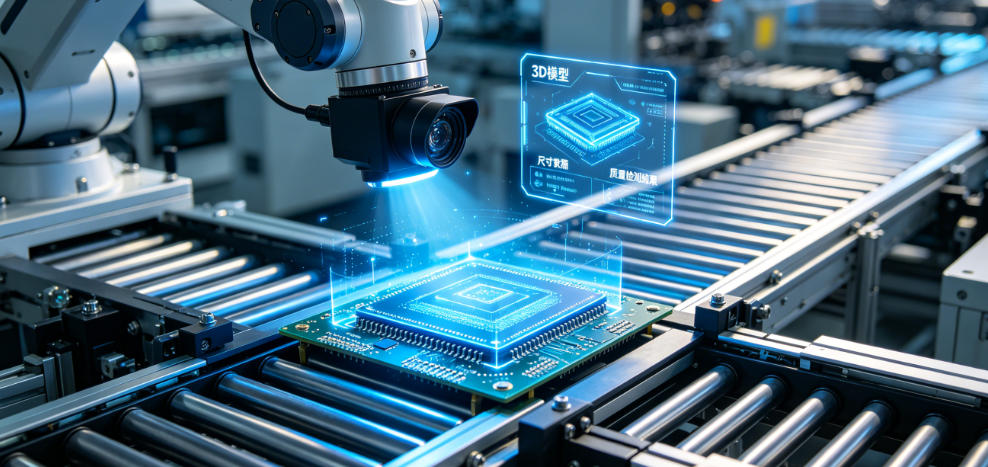
Used for PCB inspection, chip packaging validation, and SMT quality control.
How AI Enhances Machine Vision
Modern machine vision has evolved into AI-powered intelligent vision systems.
AI enables:
- Deep learning-based recognition
- Automatic defect classification
- Adaptive optical adjustment
- Real-time analytics
- Predictive quality inspection
This advancement makes sistemi di visione artificiale more accurate and efficient than ever before.
Industrial Machine Vision Trends
1. Rapid Adoption of 3D Vision
Enables spatial awareness and depth perception.
2. Deep Integration of AI and Vision
Transforms vision from 'seeing' to 'understanding'.
3. Growth of Edge Computing
Improves real-time processing at device level.
4. Fully Integrated Smart Factories
Machine vision becomes a standard component in AI-driven industrial ecosystems.
What Is visione artificiale industriale?
visione artificiale industriale (industrial machine vision) refers to the application of machine vision technology in industrial environments for automated inspection, quality control, and production optimization.
It is widely used in:
- Industrial automation production lines
- Robotic vision guidance systems
- Product inspection systems
- Smart manufacturing solutions
What Are sistemi di visione artificiale?
sistemi di visione artificiale (machine vision systems) are complete hardware and software solutions designed to capture, process, and analyze image data.
Typical components include:
- Industrial cameras
- Lighting and optics
- Image processing algorithms
- AI recognition systems
- Control units
They are essential components of modern smart factories.
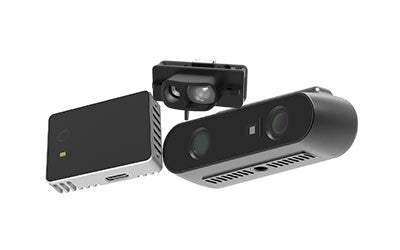
Synexens 3D Camera Of ToF Sensor Soild-State Lidar_CS20

Conclusion
Machine Vision is driving the global shift toward a new era of industrial automation. From smart manufacturing to logistics, food, and electronics industries, machine vision continuously improves production efficiency and product quality.
With the integration of AI and visione artificiale industriale and sistemi di visione artificiale, future industrial vision systems will become even more intelligent, efficient, and precise—forming the backbone of next-generation smart factories.
