

Industrial Robot Safety System with ToF Sensor & Virtual Safety Fence

How Does an Industrial Robot Safety System Using ToF Sensors and Virtual Safety Fence Work?
With the rapid advancement of Industrial Automation, smart manufacturing, and Industry 4.0, robot workstations, AGVs, AMRs, and automated production lines are being increasingly adopted across manufacturing, logistics, warehousing, new energy, automotive, and medical device industries. However, the safety risks associated with high-speed robotic operations have become a critical challenge that companies must address during their digital transformation journey.
Although traditional physical safety fences and safety light curtains provide basic protection, they often suffer from complex deployment, high maintenance costs, and limited flexibility in modern manufacturing environments. As a result, intelligent Robot Safety systems powered by 3D vision and ToF Sensor technology are emerging as the next-generation solution for Industrial Robots.
Challenges Facing Industrial Robot Safety
As Industrial Automation and smart manufacturing continue to evolve, Industrial Robots have become an essential part of modern production facilities. From automotive manufacturing and electronics assembly to battery production, warehouse logistics, and food packaging, Industrial Robots perform a wide range of repetitive, high-precision, and high-efficiency tasks such as material handling, welding, assembly, palletizing, sorting, and inspection.
While Industrial Robots significantly improve productivity and reduce labor costs, they also introduce new safety challenges. Industrial Robots typically operate at high speeds, handle heavy payloads, and run continuously. If personnel accidentally enter a robot's working area or a collision occurs between robots, workers, or equipment, the consequences can include equipment damage, production downtime, and even serious workplace injuries.
Therefore, ensuring safe human-robot collaboration has become a key consideration in modern smart factory design. To achieve both productivity and workplace safety, manufacturers require intelligent, proactive, and data-driven Robot Safety solutions that go beyond traditional protective measures.

Traditional Safety Fences
Traditional safety fencing remains one of the most widely used methods of Robot Safety protection. By physically separating robot work cells from human operators through metal fences, mesh barriers, or enclosed structures, companies can reduce the risk of accidental entry into hazardous areas.
However, as manufacturing environments become more flexible and dynamic, several limitations have become apparent:
- Occupies valuable factory floor space
- Requires redesign and reinstallation when production lines are modified
- Restricts material flow and logistics efficiency
- Cannot monitor personnel movements in real time
- Requires robot shutdown during maintenance or line reconfiguration
- Limits Human-Collaborative Robot applications
For manufacturers pursuing flexible production and higher operational efficiency, traditional fencing is becoming increasingly inadequate.
Safety Light Curtains
Safety light curtains are widely used in Industrial Robot cells, automated assembly lines, and warehouse automation systems. They create an invisible protective barrier using infrared beams that trigger alarms or stop machinery when interrupted.
Although safety light curtains offer faster response times and easier installation compared to physical fencing, they also present several challenges:
- Susceptible to dust, smoke, oil contamination, and ambient lighting conditions
- Limited to two-dimensional detection
- Unable to accurately perceive depth information
- Difficulty distinguishing between people, equipment, and materials
- Fixed monitoring areas that lack flexibility
- Potential blind spots in large robotic workstations
- False alarms that interrupt production
- Higher maintenance requirements in complex installations
As manufacturing environments become increasingly sophisticated, companies require safety systems with greater intelligence, accuracy, and adaptability.
New Challenges in Human-Collaborative Robot Environments
The rapid adoption of Collaborative Robots, AGVs, and AMRs has introduced new safety requirements.
In modern collaborative environments:
- Humans and robots share the same workspace
- Robot paths change dynamically
- Work zones frequently shift
- Safety requirements become more granular
- Manufacturers seek to maximize productivity while ensuring worker safety
Traditional fences and light curtains often struggle to meet these requirements. Consequently, many companies are adopting intelligent safety solutions based on 3D vision, ToF Sensor depth sensing, artificial intelligence, and Area and Perimeter Robot Safety technologies.
By creating Virtual Safety Fences, dynamic monitoring zones, and real-time risk assessment systems, manufacturers can achieve continuous monitoring of robotic workspaces while improving both workplace safety and operational efficiency.
What Is a ToF Sensor?
A ToF Sensor is a depth-sensing device that measures the distance between the sensor and an object by calculating how long it takes for emitted infrared light to travel to the object and reflect back.
How It Works
- Emits infrared light or a laser pulse
- Light reflects off an object
- The sensor detects the reflected light
- Distance is calculated based on the light's travel time
Intelligent Robot Safety Systems Based on ToF Sensor Technology
As Industrial Automation advances, traditional safety barriers can no longer meet the growing demands of flexible manufacturing, human-robot collaboration, and intelligent safety management.
ToF Sensor technology has emerged as a breakthrough in industrial machine vision. By measuring the travel time of emitted infrared light, ToF Sensors generate highly accurate depth maps and real-time point cloud data, enabling precise 3D environmental perception.
Unlike conventional 2D vision systems, ToF Sensors capture not only image information but also depth, height, volume, and movement data. This allows reliable operation even in challenging industrial environments with changing lighting conditions or low-texture surfaces.
By integrating 3D vision, AI algorithms, edge computing, and industrial control systems, manufacturers can build intelligent Virtual Safety Fence and Area and Perimeter Robot Safety solutions that provide continuous monitoring without extensive physical barriers.
These advanced safety systems are widely used in automotive manufacturing, electronics assembly, battery production, semiconductor facilities, warehouse automation, and Collaborative Robot workstations.
Key Advantages of Intelligent Robot Safety Systems
1. Intelligent Area Monitoring and Dynamic Safety Protection
Unlike traditional fixed barriers, ToF Sensor-based safety systems create dynamic 3D safety zones tailored to specific production requirements.
Configurable safety zones include:
- Warning Zone
- Slowdown Zone
- Danger Zone
- Emergency Stop Zone
When personnel, vehicles, or objects enter these zones, the system automatically initiates appropriate safety actions, including alarms, speed reduction, motion restriction, task suspension, or emergency stops.
This dynamic approach significantly improves operational efficiency while reducing collision risks in complex manufacturing environments.
2. Accurate Human Detection and Intelligent Object Classification
Advanced AI algorithms combined with ToF Sensor depth sensing enable intelligent target classification and behavior analysis.
Detectable objects include:
- Human presence
- Hand intrusion
- Limb approach detection
- Equipment recognition
- AGV detection
- AMR detection
- Foreign object detection
- Material accumulation monitoring
This capability dramatically reduces false alarms and improves production continuity.
3. Ultra-Low Latency Response
Modern ToF Sensor-based Robot Safety systems utilize high-speed depth sensors and edge computing platforms to achieve millisecond-level response times.
Key capabilities include:
- Real-time depth acquisition
- High-speed target tracking
- Instant AI analysis
- Multi-device synchronization
- Fast industrial communication
Many systems respond within 50 milliseconds, while high-performance solutions can achieve response times below 20 milliseconds.

4. Reliable Operation in Harsh Industrial Environments
Industrial facilities often experience dust, vibration, temperature fluctuations, oil contamination, and challenging lighting conditions.
Industrial-grade ToF Sensor safety systems support:
- High-temperature environments
- Low-temperature warehouses
- Dust-intensive production areas
- Bright sunlight exposure
- Humid conditions
- Continuous 24/7 operation
Because ToF Sensors actively emit infrared light, they remain highly reliable regardless of ambient lighting conditions.
5. Virtual Safety Fence Technology Improves Space Utilization
Traditional robotic workstations require extensive physical fencing that consumes valuable floor space.
Virtual Safety Fence technology allows manufacturers to define software-based safety boundaries, offering:
- Reduced installation costs
- Better space utilization
- Faster deployment
- Greater flexibility
- Easier production line modifications
- Independent multi-zone management
This enables safer and more efficient human-robot collaboration within modern smart factories.
6. Supporting Future Smart Factory Applications
As Collaborative Robots, digital twins, industrial AI, and intelligent logistics continue to evolve, Robot Safety systems are transitioning from reactive protection to predictive safety management.
Future systems will incorporate:
- AI-powered risk prediction
- Human behavior analysis
- Intelligent obstacle avoidance
- Digital twin safety management
- Multi-robot coordination
- Cloud-based safety monitoring
- Centralized smart factory safety platforms
By combining ToF Sensor depth sensing, artificial intelligence, and Area and Perimeter Robot Safety technologies, manufacturers can achieve a new level of intelligent and proactive safety management.
How Intelligent Robot Safety Fences Improve Factory Productivity
Traditional fencing provides protection but often reduces manufacturing flexibility. Intelligent safety fences offer several advantages:
Higher Space Utilization
Eliminate large physical barriers and maximize usable production space.
Rapid Deployment
Deploy quickly without extensive construction or facility modifications.
Flexible Production Line Adaptation
Modify safety zones through software rather than rebuilding physical infrastructure.
Lower Total Cost of Ownership (TCO)
Reduce maintenance, retrofitting, and downtime costs while improving ROI.
Area and Perimeter Robot Safety: The Future Direction of Industrial Robot Safety
With the continuous advancement of artificial intelligence and 3D vision technologies, Area and Perimeter Robot Safety is becoming a major global trend in smart manufacturing and industrial automation.
Future robot safety systems will feature:
- AI behavior prediction
- Intelligent risk assessment
- Digital twin-based safety management
- Multi-robot collaborative protection
- Cloud-based safety monitoring platforms
By integrating visual perception, edge computing, and industrial AI, these systems enable a truly proactive approach to industrial safety protection.
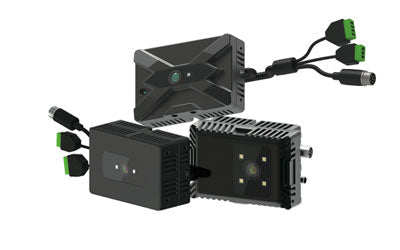
Synexens Industrial Outdoor 4m TOF Sensor Depth 3D Camera Rangefinder_CS40p

Why Choose Intelligent Robot Safety Solutions
For modern manufacturing enterprises, Robot Safety is not only critical for protecting workers’ lives but also directly impacts equipment utilization, production efficiency, and regulatory compliance.
Intelligent robot safety systems can help companies:
- Improve factory safety levels
- Reduce workplace injury risks
- Enhance automation capabilities
- Minimize production downtime losses
- Meet industrial safety standards and regulations
- Support smart factory upgrades
With the rapid development of Industrial Robots, Collaborative Robots, AGVs, AMRs, and intelligent logistics systems, 3D ToF vision-based intelligent safety fencing is becoming the core solution for next-generation Robot Safety protection.
