

3D Object Recognition & Tracking: Boost Smart Factory Automation
- Posted by LidarSensor

How Does 3D Object Recognition Improve Robot Automation and Smart Factories?
With the rapid development of smart manufacturing, industrial robotics, and machine vision, 3D Object Recognition has become a core technology in modern industrial automation and intelligent perception systems. By enabling machines to 'understand the shape, position, and pose of objects in 3D space,' it significantly improves accuracy in recognition, grasping, and decision-making.
In the context of Industry 4.0, 3D recognition is widely applied in industrial robots, AGV/AMR logistics systems, smart inspection, automated sorting, warehouse management, and human–robot collaboration, becoming a key enabler of intelligent factories.
What is 3D Object Recognition Technology?
3D Object Recognition is an intelligent perception technology based on three-dimensional vision. It uses high-precision depth cameras, RGBD sensors, ToF cameras, or structured light devices to capture spatial information of objects, and then applies AI, deep learning, and computer vision algorithms to analyze the data, enabling accurate object identification, localization, and pose estimation.
Compared with traditional 2D vision systems, 3D object recognition offers major advantages:
- Spatial understanding: It not only identifies 'what the object is,' but also determines where it is and how it is oriented in 3D space.
- Robustness in complex environments: Handles occlusion, stacking, cluttered backgrounds, and lighting variations.
- Precise measurement and modeling: Generates point cloud data for 3D modeling, size measurement, and volume estimation.
- Dynamic scene processing: Enables real-time tracking of moving or changing objects.
- Integration with smart manufacturing: Enhances automation in robotics, logistics, inspection, and warehouse operations.
- Improved safety in human–robot collaboration: Detects human position and motion for collision avoidance and safety zoning.
These capabilities make 3D object recognition a foundational technology for smart factories, flexible production lines, and digital twin systems.

Core Capabilities of 3D Object Recognition
Advanced systems typically include the following capabilities:
- 3D spatial localization (X, Y, Z coordinates): Enables precise positioning for robotic grasping and logistics tasks.
- Pose estimation (orientation and rotation): Determines object angle and posture for manipulation.
- Point cloud generation: Produces dense 3D data for modeling and measurement.
- Occlusion handling and segmentation: Recognizes objects even when partially hidden or stacked.
- Size and volume estimation: Supports quality inspection and packaging optimization.
- Dynamic object tracking: Maintains continuous tracking in high-speed environments.
- Multi-sensor fusion: Integrates RGB, ToF, structured light, and LiDAR for higher accuracy.
- Robot system integration: Connects seamlessly with industrial robots, AGVs, and AMRs.
How 3D Object Recognition Works
A typical system follows these steps:
- Depth data acquisition using RGBD cameras, ToF sensors, or structured light systems.
- RGB image and point cloud capture for combined visual and spatial information.
- Preprocessing including filtering, alignment, and background removal.
- AI-based detection and classification using CNNs, PointNet, or Transformer models.
- Output generation including object class, 3D position, pose, and size.
- Task execution integration with robots, AGVs, or automation systems.
- Real-time feedback and correction for adaptive motion and precision improvement.
Industrial Applications of 3D Object Recognition
1. Industrial Robot Grasping and Manipulation
Robots in automated production lines must handle randomly placed or stacked objects. With 3D recognition, they can:
- Detect object position and orientation
- Compute optimal grasp points
- Avoid collisions and misgrasping
- Support flexible and mixed-product manufacturing
- Improve coordination with AGVs and AMRs
2. Smart Inspection and Quality Control
In electronics, automotive, and precision manufacturing, 3D vision enables:
- Dimensional measurement (L/W/H)
- Surface defect detection (scratches, dents, deformation)
- Assembly verification
- Automated defect sorting
This improves consistency and reduces manual inspection errors.
3. AGV/AMR Navigation and Obstacle Avoidance
For warehouse logistics and smart factories:
- Detect dynamic obstacles
- Enable real-time path planning
- Build 3D environment maps
- Support multi-robot coordination
This significantly improves operational safety and efficiency.
4. Human–Robot Collaboration Safety Systems
In collaborative robotics environments:
- Detect humans entering restricted zones
- Build virtual safety fences
- Trigger robot slowdown or emergency stop
- Improve safety compliance

tecnologia di tracciamento 3D: The Next Evolution of 3D Perception
In advanced industrial vision systems, tecnologia di tracciamento 3D (3D tracking technology) represents an important evolution of 3D object recognition.
It focuses not only on recognition but also on continuous tracking and dynamic perception:
- Real-time tracking of moving objects
- Multi-object tracking capabilities
- Stable recognition in dynamic environments
- High-speed motion analysis
- AI-based behavior prediction
Industrial Applications of 3D Tracking
- Robotic dynamic grasping and assembly
- Real-time AGV/AMR navigation tracking
- Smart warehouse inventory monitoring
- Production line material flow tracking
- Safety intrusion detection
Advantages of 3D Object Recognition
- High-precision spatial perception
- Strong adaptability to complex environments
- Easy integration with AI systems
- Improved automation efficiency
- Wide industrial applicability
Future Trends
- Higher-resolution point cloud modeling
- AI-driven real-time perception and prediction
- Deep integration with digital twin systems
- Multi-sensor fusion (LiDAR + RGBD + ToF)
- Cloud-edge collaborative computing
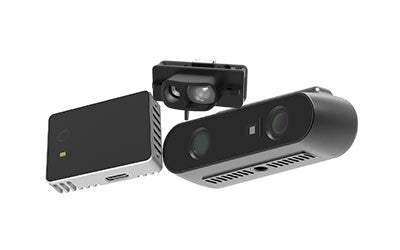
Synexens 3D Camera Of ToF Sensor Soild-State Lidar_CS20

Conclusion
3D Object Recognition technology is reshaping industrial automation by enabling machines to better understand spatial environments. Combined with tecnologia di tracciamento 3D, it evolves from static recognition to dynamic intelligent perception.
In the era of Industry 4.0, it will remain a core technology driving smart factory transformation and advanced robotics applications.
